


By Mohammed Ibrahim
A nation’s true strength is not measured only by the wealth beneath its soil, the height of its buildings or the size of its economy. It is measured by how well it understands, develops and empowers its people.
For decades, Nigeria’s population has been discussed largely in terms of numbers, projections and demographic challenges. Yet, behind every statistic is a human story: a child awaiting education, a mother seeking healthcare, a young entrepreneur searching for opportunities and a community aspiring to development.
Today, a more compelling national conversation is emerging: How can Nigeria transform its population from a statistical responsibility into its greatest economic and developmental advantage?
At the centre of this important conversation stands the National Population Commission (NPC), one of Nigeria’s most strategically important institutions, with Dr. Abuh Mohammed occupying a critical position in its administrative leadership as Director-General.
More Read

The Commission’s responsibility goes far beyond counting Nigerians. Its work provides the demographic foundation upon which national planning, public investment, healthcare delivery, educational expansion, infrastructure development and economic transformation depend.
A New Conversation About Nigeria’s Greatest Wealth
Nigeria’s greatest resource is not necessarily petroleum, natural gas, solid minerals or agricultural land.
More Read
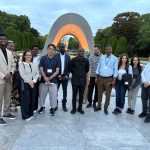
It is the Nigerian people.
However, human potential cannot be effectively harnessed without reliable information.
How many children require classrooms? How many communities need primary healthcare centres? Where should industries be established? Which local government areas require additional infrastructure? Where are the greatest opportunities for employment, housing and investment?
These are not questions that can be answered through assumptions. They require credible demographic intelligence.
This is why the NPC must be recognised not simply as a census institution but as a strategic national development institution whose work can influence the direction of Nigeria’s future.
The Director-General and the Opportunity for Institutional Transformation

For Dr. Abuh Mohammed, the office of Director-General represents an important responsibility at a time when Nigeria requires stronger institutions, better planning systems and more effective coordination of development resources.
Working within the Commission’s leadership structure, the Director-General has an opportunity to help strengthen administrative effectiveness, institutional partnerships, stakeholder engagement and the translation of demographic information into practical development outcomes.
The challenge is not merely to produce population statistics. It is to ensure that these statistics become instruments of national progress.
A stronger NPC can help policymakers understand where intervention is most urgent, where investment can generate meaningful returns and how public resources can be directed towards genuine human needs.
Such an approach would give population management a more prominent place on Nigeria’s national development agenda.
From Statistics to Economic Intelligence
As President Bola Ahmed Tinubu’s administration pursues an ambitious trillion-dollar economic vision, Nigeria must recognise that economic transformation requires accurate knowledge of the people who produce, consume, innovate and drive the economy.
Population information is fundamental to market development, workforce planning, investment decisions and public service delivery.
Reliable demographic data can help investors identify emerging markets, enable governments to anticipate infrastructure demand and assist development institutions in designing interventions that respond to the actual needs of communities.
Population intelligence must become economic intelligence.
A country that understands its demographic structure is better positioned to plan its economic future.
This presents an opportunity for the NPC to deepen its relevance to both government and the private sector.
No Child Is Invisible, No Community Is Forgotten
One of the most important responsibilities associated with population administration is ensuring that births and deaths are properly registered.
Behind every unregistered birth is a potential gap in national planning and a child whose legal identity may be more difficult to establish.
A stronger civil registration and vital statistics system can support children’s rights, social protection, healthcare planning and national development.
Imagine a Nigeria where every newborn child is registered, every community is adequately represented in development planning, and every local government area can be assessed using reliable demographic information.
That is the kind of national transformation that deserves sustained public attention.
Every Nigerian deserves to be counted, but more importantly, every Nigerian deserves to count.
The 774 LGAs: Where National Development Must Become Personal
Nigeria’s development story cannot be written from Abuja alone. It must reach the villages, towns, cities and communities across the country’s 774 local government areas.
This is where the philosophy of Project 774 Network offers a complementary grassroots perspective.
Through community engagement, public enlightenment and citizen participation, Project 774 Network advocates connecting national institutions with the people whose lives their policies are intended to improve.
The convergence of credible population information and grassroots development creates an important opportunity for dialogue on community-level planning, public awareness and citizen inclusion.
A better-informed population is better positioned to participate in development programmes, understand the importance of birth registration and support responsible national data initiatives.
The central message is unmistakable: national development becomes meaningful when its benefits can be felt at the grassroots.
Unlocking Partnerships and International Development Opportunities
The NPC’s mandate also presents opportunities for deeper collaboration with development partners, research institutions, technology organisations and responsible private-sector investors.
International institutions working in population development, maternal and child health, civil registration, demographic research and digital public infrastructure represent potential areas for collaboration.
Such partnerships could support institutional capacity-building, modern registration systems, professional training, public enlightenment and improvements in data management.
However, the most sustainable partnerships must be built on transparency, clear institutional priorities, measurable outcomes and appropriate safeguards for citizens’ personal information.
The future of development financing will increasingly favour institutions that can demonstrate clearly defined needs, responsible governance and measurable impact.
The NPC therefore has an opportunity to strengthen its institutional visibility while presenting well-defined programmes capable of attracting legitimate technical and financial support.
A Key Institution That Deserves Strategic National Attention
Public communication must also become an important part of the conversation.
Many Nigerians associate the National Population Commission almost exclusively with population censuses. Yet, its relevance extends into everyday national life.
Its work connects to the birth of a child, the planning of a hospital, the construction of a school, the location of a market and the development of entire communities.
A sustained public enlightenment strategy could help Nigerians better understand the Commission’s mandate and the benefits of accurate demographic information.
Through credible media engagement, expert interviews, educational programming and grassroots conversations, the Commission’s work can become more visible, accessible and relevant to the public.
The Nationalist TV believes that institutions performing essential national responsibilities deserve informed public attention, constructive scrutiny and meaningful dialogue.
The Future Must Be Planned, Not Guessed
Nigeria stands at an important developmental crossroads.
Its expanding population presents significant opportunities, but those opportunities must be matched by sound planning, investment in human capital, institutional efficiency and reliable demographic information.
For the National Population Commission, this is an opportunity to move the national conversation beyond the periodic counting of people towards the continuous understanding of their needs, circumstances and potential.
For Dr. Abuh Mohammed and the Commission’s leadership, the enduring measure of institutional progress will be the extent to which better population information supports better decisions and improved outcomes for Nigerians.
The country must begin to see demographic information not as a collection of figures in government reports but as a foundation for building a more inclusive and prosperous society.
The Nationalist TV’s Perspective
A population is not a burden when its potential is understood. This is what The Nationalist TV intends to project consistently. A young generation is not a liability when its future is properly planned. And a nation is not without direction when its people are recognised, represented and empowered.
Nigeria must move from counting its people to making its people count.
From demographic estimates to development opportunities.
From national statistics to local transformation.
From population growth to shared prosperity.
This is because Nigeria’s future will not be determined simply by the number of Nigerians but by how wisely the country invests in every Nigerian.
Alhaji Ibrahim is the Publisher and Editor-in-Chief of The Nationalist Magazine and the National Coordinator of Project 774 Network.