
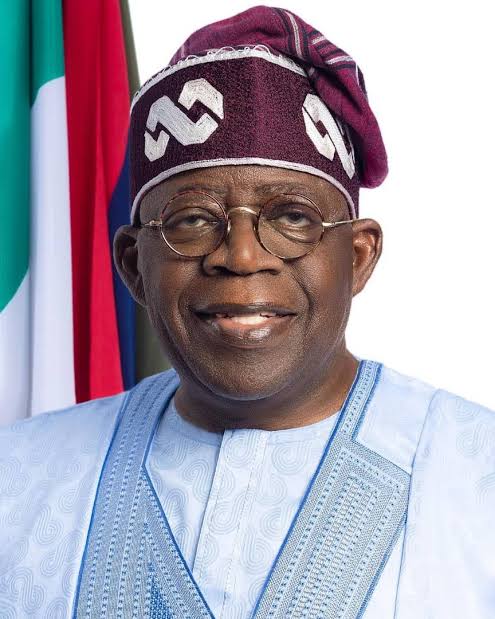
When President Bola Ahmed Tinubu announced the removal of the petrol subsidy in May 2023, one of the most important consequences was a fundamental change in Nigeria’s public finance system. Resources that had previously been absorbed by subsidy payments began flowing into the Federation Account, substantially increasing the amount available for distribution among the Federal Government, states and local governments.
The scale of that transformation is now increasingly visible. According to Finance Minister Taiwo Oyedele, monthly FAAC distributions have risen from an average of about ₦300 billion under previous administrations to more than ₦2 trillion under the Tinubu administration. In July 2026, FAAC distributed ₦3.007 trillion to the three tiers of government, one of the clearest indications yet of the new fiscal environment created by the reforms.
This is an important part of the Tinubu reform story. The reforms have not merely altered the price of petrol or the foreign-exchange regime. They have expanded the fiscal capacity of governments across Nigeria, creating room for states that previously struggled to pay salaries and meet basic obligations to stabilise their finances and invest in development.
The most compelling evidence of what this new fiscal space can achieve is visible in Lagos State and the Federal Capital Territory.
Lagos stands out among the states because it has combined higher federal allocations with a strong internally generated revenue system, a large productive economy and an established administrative structure. Under Governor Babajide Sanwo-Olu, the state has continued to invest heavily in transportation, roads, bridges, healthcare, education, urban renewal and grassroots economic development.
More Read
In the first six months of 2026, Lagos received about ₦365.78 billion in net FAAC allocations, the highest among the 36 states. The figure represented nearly 17 per cent of the ₦4.54 trillion distributed to states during the period. About ₦344.06 billion came from VAT, reflecting the enormous contribution of Lagos’s economy to national revenue.
This is particularly significant because Lagos is not an oil-producing state and does not enjoy oil derivation revenue. Its position is driven substantially by the size and productivity of its economy. The Tinubu reform environment has therefore created a powerful fiscal cycle: economic activity generates VAT, national revenue rises, FAAC distributions increase and the state has greater resources to finance development.
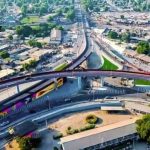
The Lagos Red Line is one of the clearest symbols of this transformation. The 37-kilometre rail corridor is designed to provide mass transportation and ease pressure on Lagos roads. The Lagos State Government says its first phase can transport about 250,000 passengers daily at full operation. The project represents more than a transport intervention. It is an investment in productivity, mobility and the long-term competitiveness of Africa’s largest urban economy.
The Blue Line and other transport investments reinforce the same vision of a Lagos increasingly connected by rail and road. These projects demonstrate how increased fiscal resources can be converted into infrastructure that affects millions of people.
Road construction has also expanded across the state. In 2025, the Lagos Government reported the completion of 36 road projects across the three senatorial districts and later announced the handover of 39 roads and five bridges, including projects in Badagry. These investments extend development beyond the traditional commercial centres and improve connections between communities, markets, workplaces and public institutions.
The grassroots dimension is equally important. In Ikorodu, the state initiated the 1.3-kilometre Monsuru-Egbeyemi/Alhaja-Agbaje Street Road to improve connectivity and unlock economic opportunities. Such projects show how a national fiscal policy eventually becomes meaningful to ordinary citizens. People do not experience FAAC as a figure in a government document. They experience it as a road that becomes motorable, a school that gets new classrooms, a hospital that receives new facilities or a transport system that reduces commuting time.
Education is another major area of investment. The Lagos Government announced the commissioning of 16 ultra-modern classroom blocks across the state’s six education districts, alongside other school rehabilitation projects. Its 2024 Citizens Budget also provided ₦550.689 billion for infrastructure renewal, covering roads, bridges, public transportation and other social infrastructure.
Healthcare has received similar attention. Projects highlighted by the state include the New Massey Street Children’s Hospital, a 280-bed General Hospital in Ojo, upgrades to healthcare facilities in Ibeju-Lekki and improvements at Lagos General Hospital. An Accident and Emergency Centre was also commissioned in Epe, extending emergency medical capacity beyond the central metropolitan areas.
The state has also used public resources to support livelihoods. Lagos reported that 1,700 vulnerable residents received working tools and start-up capital through its Micro Enterprise Support Initiative. This demonstrates that the benefit of increased government revenue can extend beyond major construction projects to direct economic empowerment.
Lagos’s performance also has an important historical dimension. President Tinubu served as governor of Lagos State from 1999 to 2007 and played a major role in developing the state’s revenue architecture and administrative model. It is therefore understandable that Lagos has become an important example of what the fiscal changes associated with his presidency can produce.
The Federal Capital Territory offers another powerful example of this fiscal dividend. Under President Tinubu and FCT Minister Nyesom Wike, Abuja has witnessed an aggressive infrastructure programme covering major roads, satellite towns, transportation, education, healthcare and other public facilities.
Wike has said that about 70 per cent of infrastructure projects completed by the FCT Administration under Tinubu were inherited projects that had remained abandoned for between 15 and 16 years. He has also highlighted a shift toward capital spending, with the administration directing a much larger share of its resources into physical development.
The FCT’s infrastructure programme includes the B6 and B12 roads, Arterial Road N20, Kuje Road, Northern Parkway, Old Keffi Road and several projects in satellite towns. The emphasis is significant because Abuja’s development cannot be confined to the city centre. Extending infrastructure to Kuje, Bwari, Gwagwalada, Kwali, Abaji and surrounding communities broadens the reach of public investment.
In July 2026, Wike announced that 50 projects had been inaugurated in the FCT under the Tinubu administration. He described the infrastructure programme as a report card for the administration, while further projects are expected to be completed before the end of 2026.
The 2025 FCT budget provides another indication of the scale of the investment. The territory proposed a ₦1.78 trillion budget, with about ₦801.5 billion earmarked for the FCDA and ₦137 billion for the Satellite Towns Development Department. The plan included major spending on roads, transportation, education, healthcare, water and other infrastructure.
Education received a proposed ₦181 billion, health ₦54 billion, water ₦37.4 billion and transportation ₦79.3 billion. Infrastructure, covering roads, district development and public buildings, received about ₦383.5 billion in the sectoral breakdown.
The FCT experience is important because Abuja is not simply another city. It is Nigeria’s administrative capital. Infrastructure investment there has national significance, while the extension of development to satellite communities demonstrates that public resources can be used to address both metropolitan and grassroots needs.
The broader FAAC figures explain why these investments have become possible. In May 2026, FAAC approved ₦2.3 trillion for distribution to the Federal Government, states and local governments. States received ₦759.141 billion, while local governments received ₦534.277 billion. In July, the total distribution climbed to ₦3.007 trillion.
For states that previously struggled to meet payroll obligations, the increased revenue provides an opportunity to stabilise finances. For states with stronger administrative capacity, it creates room for ambitious capital investment. For local governments, it creates the possibility of taking development closer to communities.
This is why local government financial autonomy fits naturally into the Tinubu reform agenda. Nigeria has 774 local government areas, making councils the tier of government closest to millions of citizens. If the purpose of increasing Federation Account revenue is to improve lives, resources must ultimately reach communities where people live.
The Tinubu administration’s support for local government autonomy is therefore strategically important. Greater financial autonomy can enable councils to invest directly in rural roads, primary healthcare, basic education, water, sanitation, agriculture and other local needs.
The Supreme Court’s 2024 judgment on local government financial autonomy strengthened this direction by ruling that local governments should have access to their allocations from the Federation Account without state governments exercising effective control over those funds. President Tinubu has repeatedly called for implementation of the judgment and described effective local government administration as essential to national development.
The scale of the opportunity is enormous. PUNCH reported that local governments received about ₦4.496 trillion between July 2024 and June 2025, rising to approximately ₦5.984 trillion between July 2025 and June 2026. That represents an increase of about ₦1.488 trillion, or 33.1 per cent.
The implication is clear: the fiscal reform is creating more money at every level of government. The next task is to ensure that the money is converted into visible development.
The Lagos and FCT experiences show what can happen when increased public resources meet political will, planning and administrative capacity. Lagos is expanding rail, roads, bridges, schools, hospitals and economic empowerment. Abuja is reviving abandoned projects, building new roads, extending infrastructure to satellite towns and investing in public services.
These achievements place the Tinubu reform agenda in a broader perspective. The reforms have created the fiscal space. State and territory governments are using that space to finance projects that directly affect citizens. Local government autonomy can take the process further by bringing resources closer to the grassroots.
This is the real significance of the FAAC transformation. It is not simply about bigger monthly figures. It is about expanding the capacity of government to act.
For years, many states operated under severe fiscal constraints. Salaries were delayed, capital projects suffered and governments struggled to meet competing demands. The post-reform revenue environment is changing that equation. States now have greater resources to plan, invest and deliver.
Lagos provides the clearest state-level illustration. Its rail projects are transforming transportation. Its road and bridge programmes are improving connectivity. Its education investments are expanding school infrastructure. Its healthcare projects are strengthening medical access. Its empowerment programmes are supporting livelihoods.
The FCT provides a complementary illustration. Its road programme is reconnecting districts and satellite towns. Its capital spending is reviving long-abandoned projects. Its investments in education, health, water and transportation are strengthening the infrastructure of the nation’s capital.
These are the practical expressions of the Tinubu reform dividend.
The reforms have therefore created a new question for Nigerian governments. The issue is no longer simply where government revenue will come from. Increasingly, citizens can ask what governments are doing with the larger resources now available to them.
That is a significant change in Nigeria’s fiscal conversation.
President Tinubu’s reform agenda has expanded the national revenue pool, strengthened FAAC distributions and created new opportunities for states and local governments. Lagos and the FCT demonstrate how that additional fiscal capacity can support ambitious development programmes.
The next stage is to deepen the gains by ensuring that local governments enjoy genuine financial autonomy and can deploy their increased allocations transparently and effectively. When that happens, the reform dividend can travel from federal revenue statistics to the most remote communities.
A worker paid on time, a road connecting farmers to markets, a functioning health centre, a new classroom, reliable water supply and a local council capable of responding to its community’s needs are the ultimate measures of successful reform.
That is the promise of the new fiscal era.
Tinubu’s reforms have created the resources. Lagos and the FCT are showing what those resources can accomplish. Local government autonomy can take the gains even closer to the people.
The story of FAAC under Tinubu is therefore becoming a story of fiscal renewal and development capacity: more resources entering the system, more money reaching governments and more opportunities to turn public revenue into infrastructure, services and economic opportunity.
The challenge now is to sustain that momentum, deepen accountability and ensure that the benefits of Nigeria’s expanding fiscal capacity reach every level of government and, ultimately, every Nigerian community.