
By Shehu Idris, Kano
Financial Autonomy
When the Supreme Court ruled in July 2024 that state governments could no longer retain funds meant for Nigeria’s local governments, the judgment was expected to transform governance at the grassroots.
The logic was simple. Nigeria’s 774 local government councils are the closest tier of government to the people.
If more money reaches them and they gain greater control over it, rural roads should improve, primary healthcare centres should function better, schools should receive attention and communities should begin to see the government more directly.
Where are impacts of the trillions?
Two years after the landmark judgement, however, a troubling rhetorical question is emerging.
Nigeria has significantly increased the amount of money flowing through the Federation Account since President Bola Ahmed Tinubu’s economic reforms began.
Local governments have received trillions of naira. Yet, outside a few places where grassroots infrastructure is visibly expanding, many communities are still asking a familiar question: where is the money?
The answer increasingly points away from Abuja and towards the political and administrative structures within the states that continue to influence how resources meant for the grassroots are deployed.
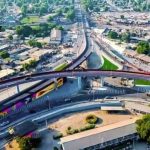
Lagos and the Federal Capital Territory (FCT) provide some of the most visible examples of what increased public resources can achieve when they are translated into projects close to the people.
They also raise an uncomfortable question: if the money available to governments is now much larger, why is grassroots development still so uneven across Nigeria?
Pre-reform and post-reform era
The difference between the pre-reform and post-reform fiscal environment is substantial.
Before Tinubu’s administration, monthly allocations to local governments were generally lower than the figures recorded in the post-subsidy-removal period.
National Bureau of Statistics (NBC) data show that local governments received ₦171.26 billion from the Federation Account in April 2023, ₦183.23 billion in February 2023 and ₦173.94 billion in March 2023. By June and July 2023, allocations were about ₦221.79 billion and ₦218.06 billion respectively.
The post-reform period has produced much larger flows. According to an analysis of FAAC data reports, local governments received a combined ₦4.496 trillion between July 2024 and June 2025.
Monthly allocations during that period ranged from about ₦306.53 billion to ₦434.57 billion.
By July 2026, local government councils had been allocated approximately ₦10.479 trillion between July 2024 and June 2026.
That is an extraordinary amount of money for the third tier of government. The comparison is stark.
Under the older FAAC environment, monthly local government allocations commonly stood around ₦170 billion to ₦290 billion, depending on revenue performance.
In the Tinubu era, monthly allocations have increasingly moved into the ₦300 billion to more than ₦400 billion range.
The increase followed the removal of the petrol subsidy and other reforms that altered Nigeria’s revenue environment.
But increased revenue alone does not build roads. Money must first reach the institutions meant to use it. Then those institutions must deploy it transparently.
That is where Nigeria’s local government problem begins.
Governors and implementation problem
On July 11, 2024, the Supreme Court declared it unconstitutional for state governments to retain or control funds meant for local governments.
The court ordered that local government allocations should go directly to the accounts of constitutionally recognised councils and ruled against the continued use of unelected caretaker structures to control the third tier.
The ruling was supposed to mark a new beginning. Yet implementation has remained complicated.
Reports indicate that state-level influence over local government finances and administration remains a major obstacle despite the trillions allocated to the third tier.
This raises a fundamental question. If Abuja is putting more money into the Federation Account and the law says local governments should exercise greater financial control, why are so many communities still unable to point to corresponding improvements in roads, markets, schools, water supply and primary healthcare?
The answer cannot simply be that the federal government has not released enough money. The figures show that substantially more money is already in the system.
Lagos as a model
The more difficult question is what happens after the money leaves Abuja.
Lagos is a perfect model of local government administration under Governor Sanw-Olu.
Grassroots infrastructure and public projects are more visible across LGAs in Lagos than in many states where local governments receive substantial allocations but leave little physical evidence of how the money is being used.
Lagos operates with its constitutionally recognised 20 local government areas, alongside 37 Local Council Development Areas created by the state.
In July 2025, the state inaugurated elected chairmen and vice-chairmen across the 20 LGAs and 37 LCDAs, with the government emphasising service delivery, accountability and grassroots development.
More importantly, projects can be identified in specific communities.
In May 2025, the Lagos State Government flagged off the construction of the 1.3-kilometre Monsuru-Egbeyemi/Alhaja-Agbaje Street Road in Ikorodu Local Government Area.
The project was designed to improve access across Monsuru Egbeyemi, Alhaja Agbaje Street and adjoining streets.
It is the kind of infrastructure that demonstrates what grassroots development should look like: not simply a major highway in a state capital, but a road that directly improves movement within residential communities.
Badagry has also featured prominently in the expansion of infrastructure towards Lagos’ border communities.
In August 2025, the Lagos Government announced the inauguration of the Badagry Network of Roads, including the Aradagun-Mosafejo-Ilado-Imeke Road, Samuel Ekundayo Road and Hospital Road, cutting across Badagry Local Government and Olorunda LCDA.
The state said it had handed over 39 roads and five bridges within the preceding months.
Grassroots development is meaningful only when it travels beyond high-value commercial districts.
Ibeju-Lekki has also recorded projects linked to local administration and community development. Projects unveiled in 2025 included a modern administrative block, a 170-unit housing estate, the foundation for a legislative building and a 400-metre paved road.
Projects in Agboyi-Ketu and Bariga LCDA have also been presented as examples of infrastructure and social investments taking place closer to residents.
Across Ikorodu, Badagry, Ibeju-Lekki, Agboyi-Ketu, Bariga and other communities, there is visible evidence of an attempt to translate public resources into infrastructure closer to residents.
There is also an unavoidable political dimension to the Lagos story.
President Tinubu governed Lagos from 1999 to 2007 and played a major role in building the revenue and administrative architecture that later governments inherited.
Lagos has since developed into Nigeria’s strongest internally generated revenue economy and one of the country’s most financially capable subnational governments.
But Lagos’ position in the Tinubu era also raises an important political question. Is Lagos leading by example partly because it is the political and administrative environment from which the President emerged?
The answer may not be as simple as suggesting preferential treatment. Lagos has a huge tax base, a large economy and substantial internally generated revenue. Its ability to build infrastructure cannot be explained by federal allocations alone.
Yet the political symbolism is impossible to ignore.
The president’s home state is among the places where the argument for visible grassroots development is easiest to see.
That should not be treated as a crime. It should instead challenge other state governments.
If Lagos can combine federal allocations, internally generated revenue and local administrative structures to produce visible development, why are states with smaller populations and fewer infrastructural pressures unable to demonstrate similar results with the billions flowing into their local government systems?
The Lagos example should not merely be celebrated. It should be replicated.
FCT’s Area Council devt model
The Federal Capital Territory tells a similar story, although with an important difference.
The FCT does not have local governments in exactly the same constitutional sense as Nigeria’s 36 states. It has six Area Councils: Abuja Municipal Area Council, Bwari, Gwagwalada, Kuje, Kwali and Abaji.
The FCT also has the Federal Capital Development Authority, or FCDA, which is a development agency and not a local government.
This distinction matters. Still, the six Area Councils demonstrate how public investment can be extended from an urban centre to communities at the grassroots.
Under the FCT infrastructure programme, projects have been delivered or commissioned across the six Area Councils.
According to the Presidency, about 150 kilometres of roads had been completed or were under construction across all six Area Councils during the Tinubu administration.
The projects include the 9km Paikon-Kore–Ibwa Road and the Aguma Palace–Radio Nigeria–New Market Road in Gwagwalada; the 5km Gaba–Tokulo Road and a two-span river bridge in Bwari; a 5km asphalt carriageway from Tipper Garage Junction to the Local Education Authority Secretariat in Kuje; the 11km Yangoji–Sukuku–Ebo Road in Kwali; the 5km Saburi Road in AMAC; and road projects extending infrastructure to communities in Abaji.
The FCT Administration has also documented rural infrastructure projects, including roads and electrification schemes in Kwali, Bwari, Gwagwalada and Kuje communities.
Again, these projects are mostly financed from local government allocations.
The lesson remains relevant.
Money and authority available within a public system are being converted into visible projects outside Abuja’s city centre.
This is where the Nigerian story becomes more difficult.
Between July 2024 and June 2026, local governments were allocated about ₦10.479 trillion. Yet state-level control over the process has remained a major concern.
It means the debate can no longer be reduced to whether President Tinubu has increased revenue available to governments.
The figures show that he has presided over a period in which the Federation Account has generated and distributed substantially more money.
Tinubu isn’t the problem
Across several states, residents still complain about impassable rural roads, abandoned primary healthcare centres, dilapidated schools, poor drainage, non-functional markets, lack of potable water and weak agricultural support.
Yet, those same councils are beneficiaries of federal allocations.
That contradiction cannot be ignored. It would be too simplistic, and politically convenient to blame Tinubu for every failed road, abandoned health centre or underdeveloped community in Nigeria.
The federal government does not construct every rural road. The President does not administer Nigeria’s 774 local governments.
Governors and state political structures play a central role in determining whether local government systems are financially viable and capable of delivering services.
The Supreme Court itself recognised this problem when it ruled that governors should not retain funds meant for the third tier.
If local government allocations are increasing dramatically but grassroots communities are not seeing corresponding development, citizens are entitled to ask harder questions.
Who is controlling the money? How much reaches the councils? How much is spent on salaries and recurrent expenditure?
How much goes into roads, schools, health centres and water projects? Where are the audited accounts?
These are not anti-government questions. They are the basic questions in a democracy.
Figures tell a compelling story
In April 2023, local governments collectively received about ₦171.26 billion. In February 2023, they received ₦183.23 billion. In March 2023, they received ₦173.94 billion.
By January 2024, the figure had risen to ₦288.93 billion. Between July 2024 and June 2025 alone, local governments received ₦4.496 trillion. Between July 2024 and June 2026, the total rose to approximately ₦10.479 trillion.
The money is therefore significantly larger. That should have produced a more visible national grassroots development boom.
In Lagos, there is visible evidence of roads, council infrastructure and community-level projects. In the FCT, infrastructure has moved beyond the city centre into Bwari, Gwagwalada, Kuje, Kwali, Abaji and AMAC.
But in too many other states, citizens are still struggling to identify what increased allocations have changed in their communities.
Governors and accountable governance
The federal government cannot fairly carry all the blame for the continued failure of grassroots development.
Tinubu’s administration has presided over a significant expansion in the revenue flowing through FAAC. The Supreme Court’s judgment has also provided a legal basis for greater local government financial independence.
The problem is increasingly about the last mile of governance.
How does money move from the Federation Account to a functioning borehole in a village?
How does it become a rehabilitated primary school? How does it become medicine in a health centre? How does it become a road that allows farmers to transport food to the market?
That transformation does not happen automatically when FAAC meets in Abuja.
It happens when governors allow local institutions to function, when council officials are accountable and when citizens can track the money.
Lagos and the FCT should be presented as evidence that public resources can produce visible results when government institutions prioritise infrastructure and community-level development.
Lagos demonstrates the value of combining a strong revenue base with active local administrative structures and visible projects across communities.
The FCT demonstrates that development does not have to stop at the gates of the Federal Capital City. Roads and other infrastructure can be extended to satellite towns and rural communities.
Every community in the 774 local governments deserves to know what happens to the money allocated in its name.
The Tinubu administration has changed the financial equation. More money is flowing through the Federation Account. Local governments have received trillions of naira. The Supreme Court has declared that governors should not retain funds meant for the third tier.
The next question is no longer simply whether money is available.
The question is: who is preventing the money from becoming development?
That question should be directed increasingly to state governments and the political structures that have historically exercised control over local government finances.
Governors should publish clear records showing how much their local governments receive, how the funds are spent, what projects have been completed and how citizens can independently verify those projects.
There is a lesson in Lagos that Nigeria should not ignore.
The lesson is not merely that Lagos is rich. Neither is it simply that Lagos is the home state of President Tinubu.
That connection may make Lagos an important symbol of the Tinubu-era development philosophy, but the larger lesson is more practical.
Money meant for the grassroots must be visible at the grassroots.
Residents should see it in roads, primary healthcare centres, markets, schools, drainage systems and rural communities.
Where that does not happen despite the enormous increase in local government allocations, citizens have every right to demand answers.
Tinubu’s administration has expanded the fiscal space. The Supreme Court has strengthened the legal argument for local government autonomy.
The responsibility now shifts increasingly to those who control the machinery between Abuja and the grassroots.
And that is where Nigeria’s governors must come under closer scrutiny.
If Lagos and the FCT can demonstrate what increased public resources look like on the ground, the question for the rest of Nigeria is no longer whether there is enough money.
The question is: What happened to it?