

By Joseph Tersee and Yari Abdullahi
Nigeria’s agricultural story is changing. The farm is no longer being treated simply as a place where food is produced; it is increasingly being positioned as the starting point of a much bigger economic chain — from tractors and improved seeds to processing factories, exports, jobs and foreign exchange. Under President Bola Ahmed Tinubu, agriculture has moved to the centre of the Federal Government’s economic diversification and food-security agenda, with interventions covering mechanisation, fertiliser, irrigation, financing, processing, climate resilience and agricultural exports.
That shift began with one of the administration’s earliest major policy decisions. In July 2023, President Tinubu declared a national emergency on food security, directing government agencies to urgently increase food production, improve access to agricultural inputs and strengthen the systems supporting farmers. The declaration effectively placed agriculture alongside the major economic reforms of the administration and established food security as a national development priority.
Three years into the administration, the agricultural strategy has expanded well beyond the traditional approach of distributing farm inputs. The Federal Ministry of Agriculture and Food Security now describes its programme around a broader food-system model that connects production with processing, logistics, financing, technology, marketing and exports. That approach is important because Nigeria’s agricultural challenge has never been simply about growing food; it has also been about getting that food from farms to factories, markets and consumers.
Major export engine
More Read

One of the clearest signs of the changing agricultural landscape is the rise in the value of agricultural exports. Nigeria’s agricultural exports were valued at about ₦4.44 trillion in 2024, compared with approximately ₦1.24 trillion in 2023. That represented an increase of more than 250 per cent and demonstrated the growing contribution of agricultural commodities to Nigeria’s external trade.
The export story continued into 2025. Nigeria’s non-oil exports reached about ₦12.36 trillion in 2025, compared with ₦9.09 trillion in 2024. Agricultural commodities were among the major contributors, with cocoa, cashew, sesame and other products providing important sources of foreign exchange. The development is particularly significant for an economy that has historically depended heavily on crude oil for export earnings.
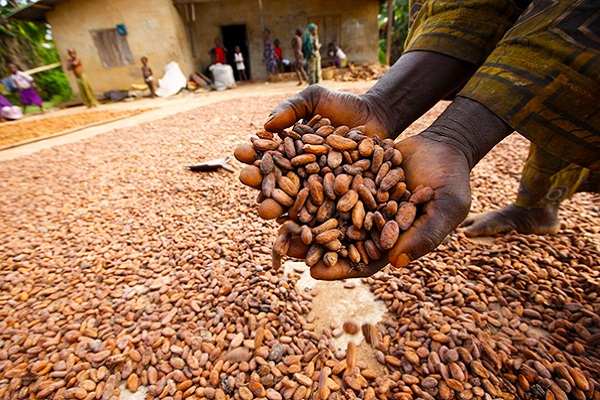
Cocoa has remained one of the strongest performers in Nigeria’s agricultural export basket. Available trade data showed cocoa accounting for about 24.61 per cent of Nigeria’s non-oil exports in 2025, reinforcing the crop’s position as one of the country’s most important agricultural foreign-exchange earners. Cashew and other agricultural commodities have also continued to strengthen Nigeria’s non-oil export portfolio.
The significance of these figures goes beyond the value of the commodities leaving Nigerian ports. Every export shipment creates activity across a chain involving farmers, aggregators, warehouse operators, transporters, processors, financial institutions, insurers, exporters and port operators. The larger the agricultural export market becomes, the greater the opportunity for Nigerians to earn income at different stages of the value chain.
From agriculture to agro-industry
The administration’s agricultural policy is increasingly built around one central idea: Nigeria should not merely produce raw agricultural commodities; it should process them at home and capture more of their value. This is the thinking behind the Special Agro-Industrial Processing Zones, which are designed to bring farmers, processors, infrastructure, markets and investors together in designated agricultural production and industrial corridors.
The first phase of Nigeria’s Special Agro-Industrial Processing Zones has financing of about $510 million, with contributions from the African Development Bank and other development partners. The programme covers seven states and the Federal Capital Territory and is intended to attract additional private investment into agro-processing and related businesses.
The African Development Bank estimates that the first phase could attract an additional $1 billion in private investment from companies operating within the zones and create hundreds of thousands of jobs. The programme is therefore designed to change the structure of rural economies by turning agricultural production centres into places where food is processed, packaged and prepared for domestic and international markets.
The Oyo State project provides a practical example of what this model could mean. The Special Agro-Industrial Processing Zone in the state is planned to accommodate up to 40 agro-processing industries, create more than 100,000 direct and indirect jobs and benefit approximately 500,000 farmers. The project illustrates the administration’s attempt to link rural agricultural production with industrial activity and employment.
The tractor revolution
For decades, inadequate mechanisation has remained one of the major constraints to Nigerian agriculture. Millions of Nigerian farmers still rely heavily on manual labour, limiting the size of farms they can cultivate and the speed with which land can be prepared. The Tinubu administration has responded by placing mechanisation at the centre of its agricultural transformation programme.
In September 2025, President Tinubu launched the Renewed Hope Agricultural Mechanisation Programme with 2,000 tractors, 10 combine harvesters, 12 mobile workshops, 9,000 agricultural implements and 9,000 spare-parts kits. The equipment was supplied through a partnership involving Nigeria and Belarus and represents one of the largest coordinated mechanisation interventions undertaken by the Federal Government.
The Federal Government projects that the mechanisation programme could support cultivation of more than 550,000 hectares, produce over 2 million metric tonnes of staple food, create more than 16,000 jobs and directly benefit over 550,000 farming households. These are projected outcomes rather than completed results, but they demonstrate the scale of the government’s ambition for mechanised farming.
The significance of the tractors extends beyond the farmers who will operate them. Mechanisation creates a new rural service economy. Tractor operators have to be trained. Machines have to be maintained. Spare parts have to be supplied. Equipment has to be transported and serviced. Farmers need scheduling and financing systems to access machinery. In that sense, every tractor can become the centre of a network of economic activities.
The ministry has specifically identified machinery operation, equipment maintenance and agribusiness services as areas where young Nigerians can find new opportunities. This is an important departure from the old perception that agriculture means only working on a farm. A modern agricultural economy requires technicians, engineers, data specialists, logistics operators, commodity traders, processors and entrepreneurs.
Fertiliser, inputs booming production
Mechanisation must be accompanied by better inputs if it is to deliver higher yields. The Federal Government has therefore expanded fertiliser distribution and other agricultural-input interventions. The Agriculture Ministry reported the distribution of millions of fertiliser bags alongside improved seeds, agrochemicals and other inputs to farmers across the country.
At one point in the programme, the ministry reported that 2.15 million bags of fertiliser, alongside the 2,000 tractors and 9,000 implements, had been deployed under the administration’s agricultural interventions. The government has also introduced a soil-health programme designed to improve fertiliser efficiency by helping farmers determine what nutrients their soils require.
The soil-health initiative is particularly significant because agricultural productivity cannot be improved indefinitely simply by applying more fertiliser. Farmers need the right fertiliser, in the right quantity, at the right time and on the right soil. The government’s approach combines soil testing, digital mapping and site-specific recommendations to make input use more scientific and efficient.
Irrigation and year-round farming
Nigeria’s agricultural potential is too large to be tied exclusively to the rainy season. The Federal Government has therefore been expanding irrigation interventions, including solar-powered irrigation systems, boreholes and other water infrastructure intended to support dry-season agriculture.
The Agriculture Ministry has reported the provision of 296 motorised and solar-powered boreholes with water-treatment plants, alongside rural infrastructure such as roads, markets and other facilities. These investments are important because water availability can determine whether farmers cultivate only once a year or can produce several times within the same year.
The administration’s dry-season farming initiatives have also targeted hundreds of thousands of hectares. Expanding irrigation means farmers can produce food during periods when rain-fed farming is impossible, increasing the supply of crops and creating additional opportunities for farm income.
Food inflation deflating
Perhaps the most direct measure of agricultural performance for ordinary Nigerians is the movement of food prices. NBS data showed food inflation falling dramatically during the period under review. In January 2026, food inflation stood at 8.89 per cent, compared with 29.63 per cent in January 2025.
Food inflation subsequently increased, reaching 17.52 per cent in June 2026, according to NBS. Even so, the figure remained significantly below the extraordinarily high levels recorded earlier in the reform period. The distinction is important: falling inflation does not mean food prices have returned to their old levels; it means the rate at which prices are increasing has slowed.
The administration’s agricultural interventions are designed to address some of the structural causes of high food prices by increasing production, improving access to inputs, reducing post-harvest losses and expanding processing capacity. If these investments continue to mature, the objective is to create a larger and more reliable domestic food supply.
Investing in the value chain
The government is also deliberately directing attention to specific agricultural value chains where investment can generate substantial economic returns. Tomato, cassava and maize have been identified among the crops with significant processing opportunities.
For example, the Federal Government has identified a tomato investment opportunity estimated at approximately $869 million, covering about 72,000 hectares in Kano, Bauchi and Borno. The project is expected to benefit approximately 36,000 farmers, improve yields and reduce post-harvest losses. Such investments can transform tomato production from a largely seasonal activity into a more structured industrial value chain.
Cassava offers another major opportunity. Nigeria is already one of the world’s leading cassava producers, but much of the crop’s potential remains untapped because of limited processing capacity. Increasing industrial processing can turn cassava into starch, flour, ethanol, animal feed and other products, creating more value from the same agricultural output.
Jobs beyond the farm
The real employment potential of agriculture lies in the entire value chain. A farmer who produces maize creates demand for seed suppliers, fertiliser dealers, tractor operators, transporters, aggregators, warehouse operators, processors and traders. The larger the production base becomes, the larger this network becomes.
The Federal Government’s National Agricultural and Food Systems Investment Plan specifically identifies production, processing, logistics and marketing as areas for employment creation, with a particular focus on young people and women. This reflects the administration’s attempt to turn agriculture into an economic ecosystem rather than a narrow rural occupation
The scale of the opportunity becomes even clearer under SAPZ Phase II. The African Development Bank’s programme framework contains a target of 1.1 million jobs, including 550,000 jobs for women, alongside a target of 120,000 youths employed within agro-processing zones. These are programme targets, not jobs already delivered, but they show the employment potential attached to Nigeria’s agro-industrial strategy.
Tackling post-harvest losses
Increasing production is meaningless if a substantial portion of the harvest is lost before reaching consumers. Nigeria’s agricultural strategy therefore increasingly emphasises storage, processing and market access.
The Federal Ministry of Agriculture has reported the establishment of 10 large-scale integrated processing plants across the six geopolitical zones and seven composite flour milling factories. The facilities are intended to increase domestic value addition and reduce the amount of agricultural produce that leaves farms without being processed.
This is where the agricultural programme intersects directly with industrialisation. A farmer growing cassava becomes more economically valuable to the national economy when the crop feeds a starch factory. Cocoa becomes more valuable when it is processed into cocoa products. Maize becomes part of a larger manufacturing chain when it is converted into flour, animal feed or industrial products.
The Tinubu administration is also positioning agriculture as an area where young Nigerians can build businesses rather than simply seek salaried employment. Digital agriculture, mechanisation services, agro-processing, logistics, commodity trading and agricultural technology all provide opportunities for young entrepreneurs.
The Agriculture Ministry has highlighted the role of youth-led innovation in areas ranging from soilless farming and drone technology to biofortified crops and digital agricultural platforms. The objective is to change the perception of agriculture from an occupation of last resort to a modern business sector capable of attracting technology, investment and entrepreneurial talent.
A new agricultural economy
Taken together, these initiatives reveal a broader economic strategy. The administration is trying to build a chain that begins with the farmer and ends with the consumer or international buyer. Mechanisation increases production capacity. Improved inputs increase yields. Irrigation extends production seasons. Processing adds value. Better roads and logistics connect farmers to markets. Export promotion creates foreign-exchange opportunities.
The early numbers provide a substantial basis for measuring that strategy. Agricultural exports have risen sharply; non-oil exports have expanded; thousands of tractors and agricultural implements have been deployed; millions of fertiliser bags have been distributed; agro-industrial processing zones are being developed; and major investments are being targeted at tomato, cassava, maize, cocoa and other value chains.
The African Development Bank’s involvement adds another dimension. Nigeria’s SAPZ programme is backed by hundreds of millions of dollars in development financing, with the expectation that much larger volumes of private-sector investment will follow. That combination of public infrastructure and private capital is central to transforming agriculture from small-scale production into an industrial sector.
As 2027 approaches, agriculture offers the Tinubu administration one of its clearest performance stories because much of the evidence can be measured. Tractors can be counted. Hectares cultivated can be measured. Agricultural exports can be valued. Processing plants can be inspected. Farmers benefiting from programmes can be identified. Food inflation can be tracked. Jobs created by agro-industrial investments can be documented.
The argument is therefore increasingly moving away from the old question of whether Nigeria has agricultural potential. Everyone knows the country has enormous agricultural potential. The more important question is whether that potential is being converted into production, processing, exports, employment and revenue. The figures emerging from the Tinubu administration’s programmes suggest that the country is beginning to build the infrastructure and investment architecture required to do exactly that.
The most compelling part of the story may be the transition from agriculture as a livelihood to agriculture as an industry. A tractor is not just a machine; it is a productivity tool. A processing zone is not just a collection of buildings; it is an employment ecosystem. An export shipment is not just a commodity leaving Nigeria; it represents farmers, processors, financiers, logistics operators and exporters participating in the same economic chain.
For President Tinubu, the message heading into 2027 is straightforward: Nigeria’s agricultural future is being built from the farm outward. The administration’s record includes mechanisation, fertiliser distribution, irrigation, agro-industrial processing, agricultural finance, export promotion, climate-resilient farming and investments designed to create jobs across the value chain.
If these programmes continue to scale, their greatest achievement may not be measured by the number of tractors purchased or tonnes of fertiliser distributed, but by what those investments ultimately produce: more productive farmers, stronger rural economies, competitive Nigerian food-processing industries, larger agricultural exports, more stable food supplies and millions of Nigerians earning their livelihoods from a modern agricultural economy.
That is ultimately the agricultural story that can be taken into the 2027 conversation, not agriculture as a slogan, but agriculture as an economic engine; not farming as subsistence, but farming linked to industry; not raw commodities alone, but Nigerian products competing in Nigerian, African and global markets. The transformation is still underway, but the direction, investments and measurable programmes provide a substantial basis for assessing the Tinubu administration’s agricultural record.