
- By Alhaji Mohammed Ibrahim
Nigeria and Saudi Arabia have a longstanding relationship rooted in religious, cultural and diplomatic ties. However, with both countries pursuing ambitious economic transformation agendas, the relationship presents an opportunity to move beyond traditional cooperation and embrace stronger trade, investment and development partnerships.
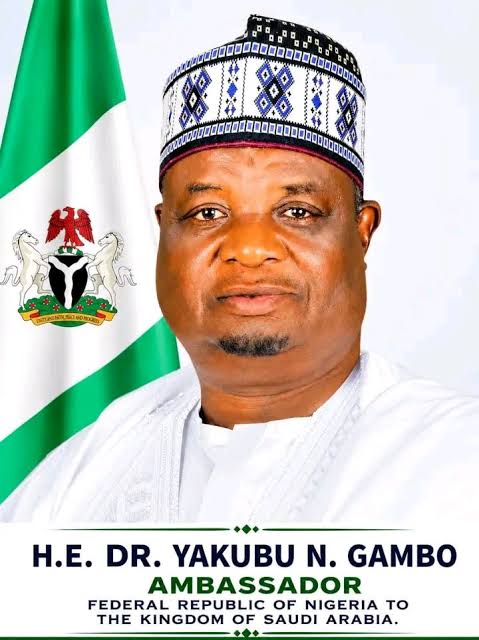
When President Bola Ahmed Tinubu approved the appointment of Dr. Yakubu N. Gambo as Nigeria’s Ambassador to the Kingdom of Saudi Arabia in March 2026, the decision came at a strategic moment for both countries.
While Saudi Arabia continues to implement its ambitious Vision 2030 development programme, Nigeria is pursuing economic reforms aimed at attracting investment, expanding productive capacity and strengthening its position in the global economy.
Against this backdrop, Dr. Gambo’s diplomatic assignment goes beyond maintaining cordial relations between the two countries. It presents an opportunity to strengthen economic diplomacy and connect the complementary interests of two nations with significant development potential.
His early diplomatic engagements have provided indications of this broader responsibility.
More Read
In June 2026, the Nigerian ambassador presented a copy of his Letter of Credence to Ambassador Abdulmajeed bin Rashid Al-Samari, Undersecretary for Protocol Affairs at the Saudi Ministry of Foreign Affairs.
The engagement provided an opportunity to reaffirm Nigeria’s commitment to strengthening bilateral relations, particularly in trade, investment, energy, education and other areas of mutual interest.
In September, Dr. Gambo also held an engagement with Saudi Vice Minister of Foreign Affairs, Waleed Elkhereiji, further underscoring the importance of sustained diplomatic dialogue between both countries.
More Read
Beyond Hajj: Unlocking the Economic Potential of Nigeria–Saudi Arabia Relations
For generations, Saudi Arabia has remained a destination of profound spiritual significance for millions of Nigerians.
The annual Hajj pilgrimage and year-round Umrah visits have strengthened people-to-people relationships, encouraged commercial interactions and promoted cultural understanding between the two countries.
However, the future of Nigeria–Saudi Arabia relations should not be measured solely by the number of pilgrims travelling between the two nations.
It should also be measured by the volume of investments facilitated, industries established, jobs created and opportunities made available to citizens.
Saudi Arabia possesses substantial financial resources, expanding industrial ambitions and growing expertise in infrastructure, logistics, energy and technology.
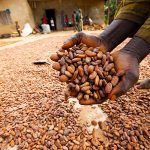
Nigeria, on the other hand, offers a large domestic market, abundant agricultural potential, mineral resources, entrepreneurial capacity and significant opportunities for infrastructure development.
These complementary strengths provide a strong foundation for mutually beneficial economic cooperation.
The challenge, however, is to translate these opportunities into tangible results through credible investment proposals, transparent business arrangements and sustained diplomatic engagement.
A successful diplomatic mission should not merely facilitate official visits and government-to-government discussions. It should also create opportunities that advance the economic interests of the country it represents.
Dr Gambo’s Vision for Economic Diplomacy
One of the clearest indications of Dr. Gambo’s diplomatic priorities emerged during Nigeria’s 66th Independence Anniversary celebration in Riyadh on October 1, 2026.
Speaking at a reception organised by the Nigerian Embassy, the ambassador described Saudi Arabia as a strategic economic partner in Nigeria’s quest for sustainable development.
He identified agriculture, mining, manufacturing, finance, technology, infrastructure, tourism and energy as critical areas where both countries could deepen cooperation.
His message reflects an important understanding that the longstanding religious and cultural relationship between Nigeria and Saudi Arabia can serve as a foundation for stronger economic partnerships.
The next challenge is to translate this diplomatic vision into practical development outcomes.
In agriculture, for instance, partnerships could support irrigation systems, mechanised farming, food processing and agricultural exports.
In the solid minerals sector, Saudi investment could encourage responsible exploration, local processing and value addition, rather than leaving Nigeria dependent on the export of raw materials.
Similarly, infrastructure partnerships could support the development of industrial parks, housing projects, logistics centres and viable smart-city initiatives.
However, these opportunities will not materialise through diplomatic goodwill alone. They require bankable proposals, clear regulatory frameworks, credible local partners and effective implementation mechanisms.
Nigerian Embassy in Riyadh: A Strategic Bridge for Investment
Nigeria’s Embassy in Riyadh has an important opportunity to strengthen its position as a strategic link between Saudi investors and credible Nigerian businesses.
One practical initiative would be the establishment of a structured Nigeria–Saudi Investment Facilitation Desk in collaboration with relevant Nigerian investment promotion agencies and their Saudi counterparts.
Such a platform could identify investment opportunities, connect prospective investors with Nigerian business partners, facilitate due diligence and monitor projects from initial discussions to implementation.
The embassy could also promote regular business forums involving Saudi investors, Nigerian entrepreneurs, financial institutions and relevant government agencies.
Such engagements would provide opportunities for businesses to explore partnerships, understand investment regulations and identify viable sectors for collaboration.
Importantly, investment promotion must be guided by transparency and commercial credibility. It should not become an avenue for exaggerated promises, speculative proposals or projects lacking economic substance.
Every major investment proposal should be supported by feasibility studies, regulatory compliance, financial credibility and clearly defined economic benefits.
Ultimately, the success of economic diplomacy should not be measured by the number of memoranda of understanding signed, but by the number of viable projects successfully implemented.
Protecting Nigerians in Saudi Arabia: The Human Face of Diplomacy
Beyond trade and investment, the welfare and dignity of Nigerians living in Saudi Arabia remain central responsibilities of the Nigerian diplomatic mission.
In August 2026, Dr. Gambo and Nigeria’s Consul General in Jeddah, Ambassador Muazam Nayaya, engaged the Nigerians in Diaspora Commission on issues affecting Nigerians resident in the Kingdom.
The discussions highlighted the contributions of Nigerian professionals, entrepreneurs and other residents, alongside concerns relating to consular assistance and Nigerians experiencing difficulties with the justice and immigration systems.
These engagements underscore a fundamental principle of diplomacy: a country’s foreign mission must protect not only its economic and political interests but also the legitimate welfare interests of its citizens abroad.
Nigerian professionals working in Riyadh, engineers contributing to infrastructure projects, students pursuing educational opportunities, traders building businesses and pilgrims requiring consular assistance all deserve an accessible and responsive diplomatic mission.
The effectiveness of a country’s foreign service is reflected partly in how well it protects its citizens, responds to their concerns and safeguards their dignity in foreign jurisdictions.
Consequently, strengthening consular services, providing timely assistance and improving engagement with Nigerian community organisations should remain important priorities for the embassy.
Connecting Riyadh to Nigeria’s 774 Local Government Areas
For Project 774 Network, an important dimension of Nigeria–Saudi Arabia economic relations is the need to ensure that international investment translates into development at the grassroots.
Foreign investment should not remain concentrated in Abuja, Lagos and a handful of major commercial centres.
Nigeria’s 774 local government areas possess agricultural resources, mineral deposits, small businesses, emerging entrepreneurs and a large population of young people seeking meaningful economic opportunities.
The benefits of stronger Nigeria–Saudi Arabia relations should therefore extend beyond the country’s major cities.
Consider the possibility of establishing agricultural processing facilities closer to farming communities, thereby reducing post-harvest losses and creating employment.
Consider vocational training partnerships supported by Saudi investors to equip Nigerian youths with modern technical and industrial skills.
Similarly, viable manufacturing enterprises could be established in different parts of the country, creating jobs and stimulating local economies.
Nigerian small and medium-sized enterprises could also benefit from properly structured export partnerships that provide access to new markets.
These possibilities demonstrate why economic diplomacy must ultimately connect international relationships with domestic development.
The Nigerian Embassy in Riyadh could strengthen collaboration with relevant government institutions, state governments, private investors and credible grassroots development organisations to identify opportunities across the country.
Such an approach would help ensure that the benefits of international partnerships reach communities where investment can make a meaningful difference.
Tinubu’s Visit to Saudi Arabia: A Moment of Diplomatic Significance
On October 29, 2026, President Bola Ahmed Tinubu arrived in Jeddah for the Umrah pilgrimage and was received at King Abdulaziz International Airport by Ambassador Yakubu Gambo and Saudi royal protocol officials.
The presidential visit highlighted the Nigerian Embassy’s important role in coordinating high-level diplomatic engagements between Nigeria and the Kingdom.
Although the President’s visit was primarily religious, it provided another opportunity to underscore the longstanding relationship between the two countries.
Nigeria’s diplomatic representation in Saudi Arabia operates at the intersection of religious pilgrimage, consular services, international cooperation and economic diplomacy.
Balancing these responsibilities requires professionalism, effective institutional coordination and sustained engagement with relevant Saudi authorities.
The embassy must therefore continue to strengthen its capacity to manage these responsibilities while advancing Nigeria’s strategic interests.
The Road Ahead: Turning Diplomatic Opportunities into National Benefits
Dr. Yakubu Gambo’s tenure in Riyadh is still unfolding, and it would be premature to assess its overall performance based solely on expectations or early engagements.
Nevertheless, the priorities outlined in his public statements present an opportunity for constructive engagement and measurable progress.
Several important questions deserve attention.
How many credible Saudi investors can be connected to viable Nigerian investment opportunities?
What practical steps can improve access for Nigerian exporters to the Saudi market?
How can new partnerships support industrial development, agricultural productivity and technology transfer?
What mechanisms can strengthen consular assistance for Nigerians living in the Kingdom?
Most importantly, how can diplomatic cooperation contribute meaningfully to Nigeria’s broader economic transformation and create opportunities across the 774 local government areas?
These are the issues that should shape the next phase of Nigeria–Saudi Arabia relations.
The answers will ultimately determine the lasting value of the ambassador’s diplomatic assignment.
Conclusion: Making Diplomacy a Bridge to National Prosperity
Nigeria and Saudi Arabia share a relationship that has endured across generations.
Faith helped establish the relationship. Mutual respect has sustained it, while economic cooperation offers an opportunity to deepen and expand it.
Dr. Yakubu Gambo occupies an important diplomatic position at a time when both countries are pursuing ambitious development objectives.
The opportunity before the Nigerian Embassy in Riyadh is to strengthen a partnership that delivers meaningful benefits to governments, businesses, communities and citizens.
For Nigeria, the ultimate measure of diplomatic success should be the practical benefits that international engagements bring to the country.
The finest achievement of an ambassador is not merely to represent his country with dignity abroad, but also to help create opportunities that improve the lives of its people at home.
If Nigeria–Saudi Arabia cooperation can be translated into productive investments, employment opportunities, technology transfer and sustainable development, the relationship will become more than a historic friendship.
It will become a strategic bridge between the development ambitions of two nations and the prosperity of generations to come.
THE NATIONALIST MAGAZINE
Influence Without Noise.
Alhaji Mohammed Ibrahim
Publisher and Editor-in-Chief, The Nationalist Magazine
National Coordinator, Project 774 Network