
By Mohammed Ibrahim
”Tinubu–Shettima reform agenda signals a new era of accountability, institutional discipline and International standards at NAHCON” — Amb. Yusuf
There comes a defining moment in the history of every institution when leadership must move beyond routine administration to confront the fundamental question of its existence: Are we merely managing yesterday’s challenges, or are we building an institution worthy of tomorrow’s expectations?
For the National Hajj Commission of Nigeria (NAHCON), that moment has arrived. Twenty years after its establishment, the Commission stands at a historic crossroads, with a renewed opportunity to transform Nigeria’s Hajj administration from a system frequently challenged by operational difficulties into one recognised for efficiency, integrity, dignity and international excellence.
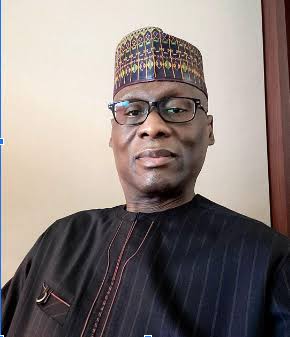
At the centre of this emerging aspiration is Ambassador Ismail Abba Yusuf, whose 37 years of diplomatic experience, international exposure and understanding of institutional relationships could become a decisive asset in repositioning Nigeria’s Hajj operations.
Under the administration of President Bola Ahmed Tinubu and Vice President Senator Kashim Shettima, the expectation is no longer simply that Nigerian pilgrims should travel to Saudi Arabia and return home safely. The greater ambition must be that every Nigerian pilgrim experiences a journey defined by dignity, professionalism, accountability and the highest possible standards of service.
The time has come for Nigeria to move from managing Hajj to mastering Hajj administration.
Reform must replace entrenched interests
For years, Nigerian Hajj administration has faced recurring public concerns over accommodation, transportation, feeding arrangements, service delivery, operational coordination and the management of pilgrims’ resources.
These concerns should not be regarded as permanent features of the pilgrimage.
Nor should any institution responsible for the sacred journey of Nigerian Muslims become vulnerable to individuals or groups seeking to exploit administrative weaknesses for personal advantage.
The arrival of a new leadership presents an opportunity to confront these challenges through institutional reform rather than temporary administrative adjustments. The message should be unmistakable: the welfare of pilgrims must never be subordinated to private interests.
Where vested interests exist, transparent procedures must replace discretionary arrangements. Where inefficiency persists, measurable performance standards must become compulsory. Where administrative weaknesses create opportunities for abuse, stronger oversight and accountability must close those gaps.
Reform must be firm, lawful and comprehensive. The most effective answer to institutional sabotage is to build a system so transparent, disciplined and accountable that manipulation becomes increasingly difficult.
The Amb. Yusuf factor: Why 37 years of diplomatic experience matters
Leadership is not merely about occupying an office; it is about bringing experience, judgment, vision and institutional discipline to the responsibilities of that office. Yusuf’s 37 years of diplomatic experience provides an opportunity to strengthen Nigeria’s relationship with Saudi authorities, international service providers and other countries recognised for effective Hajj coordination.
Diplomacy, properly deployed, is not simply the management of international relationships. It is the ability to negotiate advantages, resolve complex challenges, protect national interests and secure better outcomes for citizens. For NAHCON, such experience could be particularly valuable in the areas of accommodation negotiations, transportation arrangements, pilgrim welfare, crisis management and international cooperation.
But experience alone does not guarantee results. The challenge before Yusuf is to convert his diplomatic background into a measurable transformation of Nigeria’s Hajj administration. His greatest legacy would not be the number of meetings conducted or agreements signed, but the quality of the experience delivered to Nigerian pilgrims.
Examples of Malaysia and Indonesia
Perhaps, one of the most compelling elements of Yusuf’s vision is his determination to examine the Hajj administration systems of Malaysia, Indonesia and other countries with established experience in managing large pilgrim populations.
This ambition raises an important national question: What are these countries doing differently, and what must Nigeria learn to become one of the most respected Hajj-performing nations in the world? Malaysia has developed considerable institutional experience in pilgrim preparation, financial planning and Hajj coordination.
Indonesia, with its exceptionally large pilgrim population, offers valuable lessons in logistics, institutional organisation and large-scale service management.
Nigeria must study these experiences critically, identifying practices that can be adapted to its own circumstances.
The lessons extend beyond international travel arrangements. They include early preparation, digital registration, financial transparency, pilgrim education, health coordination, professional training and effective monitoring of service providers.
Nigeria should not approach such countries merely as an observer.
It should approach them as a determined reformer, prepared to learn, innovate and eventually establish standards that others may wish to emulate. The ultimate ambition should be to make Nigeria a reference point for excellence in Hajj administration, not a recurring example of avoidable operational challenges.
Tinubu–Shettima restoring public confidence
The administration of President Bola Ahmed Tinubu and Vice President Kashim Shettima has an important opportunity to make institutional improvement in Hajj administration part of its wider commitment to public-sector effectiveness.
For millions of Nigerian Muslims, the performance of NAHCON is not an abstract matter of government policy.
It is personal. Families save for years to undertake the sacred pilgrimage. Many pilgrims are elderly. Others are travelling internationally for the first time. They place their trust, resources and expectations in institutions responsible for coordinating their journey.
That trust must be honoured.
A reform agenda worthy of public confidence must produce visible improvements in the actual experiences of pilgrims. This means more reliable transportation, better accommodation arrangements, clearer communication, timely service delivery, effective medical support and transparent handling of pilgrims’ funds.
For the presidency, the strongest evidence of reform will not be official statements. It will be the testimony of Nigerian pilgrims returning home with confidence that their country treated them with dignity.
Hajj 2027: Opportunity to set new standards
The preparations for the 2027 Hajj offer a practical opportunity to translate reform into operational achievements. This should be approached as more than another annual pilgrimage exercise. It should become an opportunity to establish a new benchmark for planning, accountability and service delivery.
Clear timelines should guide preparations.
Service providers should be assessed against enforceable standards. Pilgrims should receive timely and accurate information. Complaints should be addressed through accessible channels, and operational performance should be evaluated transparently.
A comprehensive post-Hajj assessment should identify achievements, shortcomings and areas requiring improvement. Such an approach would help NAHCON move away from repeated crisis management towards a predictable and professionally managed system.
NAHCON 20 years after: From history to legacy
The twentieth anniversary of NAHCON should not merely be an occasion for celebration. It should be a moment of serious institutional reflection. What has Nigeria achieved in two decades of organised Hajj administration? What lessons have been learned? What structural weaknesses remain?
And what kind of institution should NAHCON become over the next twenty years?
These questions deserve thoughtful answers. The anniversary provides an opportunity to acknowledge the contributions of past leadership while creating a forward-looking reform framework capable of surviving changes in administration. The true measure of institutional maturity is the ability to improve continuously, preserve successful reforms and place public service above personalities.
Leading by example
Nigeria is too important, too experienced and too richly endowed with human capacity to remain satisfied with avoidable shortcomings in Hajj administration. The country possesses the diplomatic relationships, professional expertise and institutional resources necessary to compete with the world’s most effectively organised Hajj systems.
What is required is purposeful leadership, disciplined execution, institutional cooperation and unwavering accountability. Yusuf has an opportunity to bring his 37 years of diplomatic experience to bear on this historic responsibility.
President Tinubu and Vice President Shettima are determined to support a reform process whose benefits can be felt directly by Nigerian pilgrims. NAHCON has an opportunity, at twenty years, to begin writing a new chapter in its institutional history. The goal should not simply be to take Nigerians to the Holy Land; it should be to ensure that Nigeria’s name becomes synonymous with dignity, discipline, efficiency and excellence in the administration of Hajj.
Because the greatest tribute to leadership is not the authority it exercises, but the lives it improves. The greatest achievement of reform is not the announcement of change, but the experience of change. And the greatest legacy Amb. Yusuf could leave behind is a Hajj administration in which Nigerian pilgrims are treated with the respect, compassion and professionalism they deserve.
Alhaji Ibrahim is the Publisher/Editor-in-Chief of The Nationalist magazine, and the National Coordinator of Project 774 Network.
NAHCON Boss and Nigeria’s Match Towards Global Excellence in Hajj Operations



Leave a Comment