
By Mohammed Ibrahim
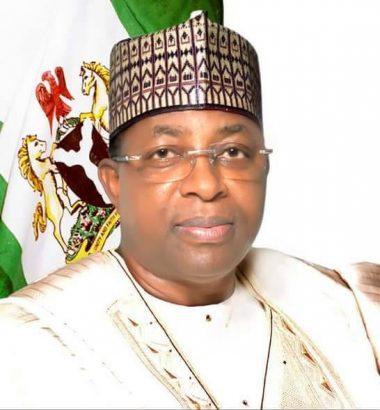
As Bauchi State approaches another defining political transition, former Governor Mohammed Abdullahi Abubakar, SAN, returns to the political center stage with something few contenders possess: the experience of having governed the state, the lessons of electoral defeat, and another opportunity to present his leadership credentials to the electorate.
Bauchi is approaching a significant political crossroads. The coming governorship election is not merely a contest between political parties: it is a test of leadership experience, public confidence, institutional competence, and the ability to translate political promises into measurable development.
At the center of this unfolding contest stands SAN Abubakar popularly known as M.A. Abubakar.
Having governed the state between 2015 and 2019, Abubakar returns with a political identity that is already familiar to the electorate. Unlike first-time contenders who must explain how they would handle the responsibilities of government, he can be examined against an actual record of executive leadership.
That distinction is important.
Advantage of Experience
There is a difference between understanding government from the outside and having carried its responsibilities from within.
As a former governor and Senior Advocate of Nigeria, M.A. Abubakar possesses a combination of legal expertise, administrative exposure and political experience. His supporters can reasonably argue that his familiarity with government institutions, public finance, executive decision-making and the challenges of state administration offers a practical foundation for another term.
However, experience alone does not guarantee effective leadership. The central question is whether the lessons of his previous administration have prepared him to deliver stronger results.
For M. A. Abubakar, the 2027 contest offers an opportunity to answer that question directly.
Established political recognition
M. A. Abubakar’s established political recognition. His years as governor mean he enters the race with a statewide political profile that many newcomers would require considerable time and resources to build. Second, executive experience. Having previously occupied Government House, he understands the complexity of coordinating ministries, departments, local government administration and state development priorities.
Third, in terms of professional credentials. His standing as a Senior Advocate of Nigeria provides a substantial professional background against which voters can assess his understanding of law, institutions and governance. Fourth, the APC governorship ticket. His emergence as the party’s candidate provides an established political platform, although its electoral effectiveness will depend heavily on internal reconciliation.
Fifth, an opportunity to demonstrate political maturity. His 2019 defeat could become an important learning experience if he convincingly explains what he would do differently and how citizens would benefit.
The Question of Credibility and Performance
Credibility in public office cannot be established by titles or political endorsements alone. For a former governor seeking a return, credibility must rest on verifiable accomplishments, responsible stewardship of public resources, responsiveness to citizens and willingness to acknowledge shortcomings.
More Read
M.A. Abubakar has an opportunity to place the performance of his 2015–2019 administration before the public, supported by documentary evidence covering education, healthcare, infrastructure, agriculture, public finance and civil service management.
A transparent comparison of his achievements, unfinished projects and lessons learned would provide a stronger basis for public confidence than political slogans. The most persuasive case for a second term is not that the past was perfect. It is that experience has produced a clearer understanding of what the future requires.
The changing Bauchi’s political equation
The 2027 election will take place without Governor Bala Mohammed seeking another consecutive term after completing his second term. That transition creates a different political environment from the contest of 2019.
However, the absence of an incumbent governor from the ballot does not automatically eliminate the strength of the governing party’s political organization.
Bauchi remains competitive, and the emergence of other prominent contenders means the contest cannot be reduced to a straightforward APC-versus-incumbent calculation. For Abubakar, the electoral opportunity is real, but so are the uncertainties.
APC unity challenge
Perhaps, the most consequential issue facing M.A. Abubakar is the internal condition of his own party.
Disagreements following the governorship primary, complaints from rival camps and the departure of influential political figures have raised legitimate questions about APC cohesion.
More Read

The reconciliation efforts associated with former Speaker Yakubu Dogara demonstrate that party leaders recognize the seriousness of these divisions.
A successful reconciliation process would require more than public declarations of unity; it would need fairness, consultation, respect for aggrieved stakeholders and confidence in the party’s internal democratic procedures.
The strength of any governorship candidate is ultimately tested, not only by personal popularity, but also by the willingness of party members and the wider electorate to trust the leadership being offered.
Development must become the central issue
Bauchi’s next governor will face substantial expectations in agriculture, rural roads, employment, education, healthcare and economic development.
The state possesses important agricultural and human resources that could support a more productive local economy. For M.A. Abubakar, the opportunity is to present a measurable development program rather than rely exclusively on his previous experience.
Such a program should identify realistic priorities, funding arrangements, implementation timelines, and mechanisms for public accountability.
It should also explain how state development can complement federal economic initiatives without compromising Bauchi’s own priorities.
M.A. Abubakar’s candidacy deserves serious consideration because he combines previous executive responsibility, legal credentials, political recognition and an established party platform. These are meaningful assets in a competitive governorship race.
Yet the outcome will depend on questions that remain unresolved: Can the APC rebuild unity? Can Abubakar demonstrate the achievements of his previous administration with credible evidence? Can he address the concerns that contributed to his 2019 defeat? And can he convince voters that his return would bring measurable improvements to their lives?
If he answers these questions convincingly, his experience could become an electoral advantage. If they remain unanswered, his previous tenure could equally become a source of political vulnerability.
The defining question for Bauchi in 2027 is, therefore, not simply whether M.A. Abubakar deserves another opportunity; it is whether he can demonstrate that a second opportunity would produce better governance, stronger institutions, and improved living standards. That is the standard by which serious leadership should be judged.
Alhaji Ibrahim, publisher/Editor-in-Chief of The Nationalist Magazine and National Coordinator of Project 774 Network wrote this independent analysis, credible information and grassroots perspectives.