
By Adebayo Adewusi and Haliru Dantijo
Measuring the gains
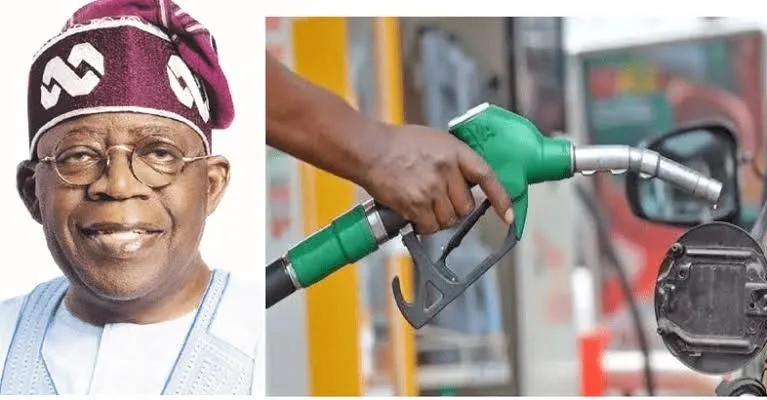
Three years on after the removal of fuel subsidy by President Bola Ahmed Tinubu, and with petrol still selling for more than N1,300 per litre in many parts of the country, the pain at the pump remains palpable, and should neither be minimised nor dismissed.
Yet, a policy as consequential as subsidy removal cannot be fairly judged by the turbulence of its opening months alone. Its deeper consequences must be measured in the ledgers of government, the fortunes of the oil industry, and the foundations of Nigeria’s productive economy.
Look beyond the queues that have disappeared from filling stations, and a more complex picture begins to emerge.

More money to states
One of the significant fallouts of subsidy removal is the improvement in the fiscal position of the states. With a greater share of federally distributed revenue now flowing to the three tiers of government, states have had more resources at their disposal, and, consequently, less pressure to borrow simply to keep their governments afloat.
The story, therefore, is not one of unalloyed triumph, nor is it one of unmitigated disaster. It is a story of painful adjustment, fiscal rebalancing, and an economy still searching for the point at which the sacrifices of today begin to yield the dividends of tomorrow.
For decades, subsidy payments consumed a share of national revenue so large that state governments were structurally starved of cash, forced into ever-deeper borrowing simply to meet payroll and pay for basic services. Subsidy removal changed the arithmetic overnight.
The Federation Account Allocation Committee (FAAC) disbursements to the three tiers of government rose from roughly N16.28 trillion in 2023 to N28.78 trillion in 2024, a jump of about 79 percent, and continued climbing toward an estimated N20 trillion-plus for states alone by 2025.
That is money that previously never left Abuja, but had been sunk into subsidising imported fuel for a relatively narrow band of consumers concentrated in urban areas.
The fiscal relief has been tangible. The chairman of the Nigeria Governors’ Forum, AbdulRahman AbdulRazaq, has pointed to his own state, Kwara, cutting its total debt profile by roughly 40 per cent since the policy took effect.
Several other states have used the windfall to clear outstanding liabilities and settle long-overdue worker benefits.
It is true, and honest analysis must say so, that the gains have been uneven. Some 20 states still borrowed a combined N458 billion in 2025, even amid the FAAC surge, producing what economists have called a “two-speed” fiscal reality.
But the structural point stands. For states that have managed the windfall with discipline, the days of routine, subsidy-driven borrowing are receding.
774 LGAs directly funded
Also, local governments are, for the first time, getting money directly. A less-discussed dimension of the reform era is the Supreme Court’s landmark July 11, 2024, judgment ordering that statutory allocations be paid directly into the accounts of Nigeria’s 774 local government councils.
It abolished the old State–Local Government Joint Account that governors had long used as a chokepoint. Between July 2024 and June 2026, local councils received a cumulative N10.48 trillion, about a quarter of all federation revenue shared across every tier of government in that period.
This matters because it is precisely the arm of government closest to rural Nigeria, responsible for feeder roads, primary healthcare centres, and market infrastructure, that had historically been the most starved of resources.
It would be dishonest to claim the fight is fully won. Implementation, however, has been inconsistent, with states such as Kaduna, Kano, Benue, Plateau, Sokoto and Abia reported to still be routing funds through the old joint-account structures rather than direct disbursement.
Tinubu has warned that an executive order may follow if governors continue slow-walking compliance.
But the constitutional and financial architecture for genuine grassroots funding, something subsidy-era Nigeria never had, is now in place, and the money is flowing at a scale (over N10trillion in two years) that simply did not exist before.
Critical infrastructure
There is also more revenue for critical infrastructure. With FAAC inflows nearly doubling for many states between 2023 and 2025, according to civic-tech monitor BudgIT, the freed fiscal space is visibly showing up in capital budgets.
Northern states such as Kaduna, Kano, Jigawa and Kebbi have redirected windfalls into road and rail projects, while the federal government has pushed forward flagship works like the Abuja–Kaduna–Kano concrete highway.
In the South-West, the 2026 budgets of Lagos, Oyo, Osun, Ogun, Ondo and Ekiti collectively exceed N8.66 trillion, with a deliberate tilt toward capital projects in roads, schools, healthcare and housing, a marked shift from the stabilisation-focused budgets of 2025.
Concrete examples exist at the state level too. Imo State’s monthly federal allocation rose from roughly N100 million to N10.7 billion post-subsidy removal, funding, among other things, the conversion of the Federal Medical Centre Owerri into a teaching hospital, while the state’s debt fell from N287 billion in 2020 to under N90 billion. Kogi has reported similar gains.
None of this erases the fair criticism, voiced by economists such as Dr. Muda Yusuf of the Centre for the Promotion of Private Enterprise, that revenue growth has outpaced visible development in many states, and that weak transparency remains the binding constraint on turning windfalls into classrooms and clinics. That is a governance challenge, not evidence that the extra money does not exist.
The subsidy regime was a sector cancer worm that has been cleaned of its costliest racket. The subsidy regime was, in the words of one recent analysis, “a racket,” an estimated N4trillion a year in savings had, for decades, “lined the pockets of a shadowy cabal of oil traders, importers, and politically connected middlemen” through the falsification of import volumes and diversion of subsidised fuel.
Its removal did not just save money; it eliminated the single largest incentive for round-tripping, over-invoicing and product diversion in Nigeria’s downstream sector.
The Nigerian Upstream Petroleum Regulatory Commission (NUPRC) has separately reported that crude oil losses from theft and pipeline metering inaccuracies fell to about 9,600 barrels per day by mid-2025.
That is the lowest level since 2009, a reduction industry observers linked to the broader wave of reform, tighter regulation under the Petroleum Industry Act, and the return of security and accountability to the sector.
Multibillion-dollar investments
Of course, multibillion-dollar investment has returned to the oil and gas corridor. Perhaps the most striking vindication of the reform agenda is the scale of capital that has flowed back into an industry multinationals were fleeing only a few years ago.
Investment in African oil and gas is projected to reach $41 billion in 2026, and Nigeria has captured an outsized share of the renewed confidence:
Renaissance Africa Energy, an indigenous consortium, took over Shell’s onshore assets and has since doubled output from a base of roughly 100,000 barrels per day.
Heirs Energies became the largest shareholder in Seplat Energy in a $500 million deal, having earlier raised $750 million from Afreximbank to expand its own production capacity.
Seplat Energy is targeting up to $3billion in investment over five years following its $1.28billion acquisition of ExxonMobil’s onshore assets, aiming for 200,000 barrels of oil equivalent per day by decade’s end; the company’s profit before tax jumped 74.1 per cent year-on-year in the first half of 2026.
ExxonMobil itself, even after divesting onshore, committed $1.5 billion to deepwater development between 2025 and 2027.
NNPC has unveiled plans to attract $30 billion in new upstream investment by 2030.
Indigenous participation in gas has risen from 69 to 83 per cent, and 2024 alone saw $6.7 billion in sector M&A activity. The presidency has directly credited subsidy removal, alongside FX unification and banking recapitalisation, with restoring the investor confidence that produced this surge, a claim borne out by the sheer volume and diversity of the deals.
With subsidy removal, local refining capacity has been transformed, and Dangote is the headline. No single development better captures the productive side of the reform than the Dangote Petroleum Refinery.
Operating at close to 99 percent capacity utilisation and processing around 565,000–648,000 barrels of crude a day, the world’s largest single-train refinery now supplies roughly 80 percent of domestic petrol demand.
In March 2026, Nigeria achieved something unprecedented in its history as Africa’s largest crude producer.
It became a net exporter of petrol, shipping 44,000 barrels a day abroad, including a landmark first delivery to Mozambique, against a modest import residual, and separately selling refined cargoes to Côte d’Ivoire, Cameroon, Tanzania, Ghana and Togo.
The macroeconomic knock-on effects are substantial. By displacing fuel imports, which once consumed roughly a fifth of Nigeria’s import bill, the refinery is estimated to be saving the country over $10billion annually in foreign exchange.
S&P Global has cited the refinery’s ramp-up as a key driver of Nigeria’s improving current account position, projected to rise to 5.8 per cent of GDP in 2026, while foreign reserves have climbed from about $33 billion in 2023 to nearly $50billion in early 2026.
None of this would have been commercially viable under the old subsidy regime, which effectively punished domestic refining by keeping imported, subsidised fuel artificially cheap.
Removing the subsidy levelled the playing field and made Dangote’s bet, and Nigeria’s long-delayed ambition of refining its own crude, bankable.
Balance sheet
Then there is the honest balance sheet in our national life. A fair-minded accounting of subsidy removal cannot ignore its costs: the inflationary shock, the squeeze on household incomes, and the governance gaps that have kept some of the windfall from reaching ordinary Nigerians.
The World Bank has noted that the reforms have contributed to real income shocks even as government revenues surged. Those costs are the legitimate subject of continuing scrutiny, and they should not be waved away by anyone citing macro numbers alone.
Three years down the line, the ledger also shows a state that borrows less recklessly, a local government tier finally receiving constitutionally mandated funds directly, infrastructure budgets swelling in states that choose to spend well.
It shows a downstream sector shedding decades of institutionalised racketeering, a wave of multibillion-dollar investment returning to Nigerian oil and gas, and, most visibly, a refinery in Lekki turning Nigeria, for the first time in its history, into a net exporter of the very fuel it used to queue for.
That is not a small inheritance from a painful policy. It is the foundation for a prosperous economy and a developed country among the comity of nations.