
By Mohammed Ibrahim
Nigeria is approaching another defining moment in its democratic journey. As the 2027 general elections draw closer, the political atmosphere across the federation is increasingly shaped by questions of leadership, continuity, economic transformation and the capacity of political parties to deliver meaningful development.
For the All Progressives Congress (APC), five states — Bauchi, Nasarawa, Gombe, Niger and Jigawa — offer an important illustration of the opportunities and challenges ahead.
In Bauchi, former Governor Mohammed Abdullahi Abubakar seeks a return to Government House. In Nasarawa, Senator Ahmed Aliyu Wadada hopes to succeed Governor Abdullahi Sule. In Gombe, Dr. Jamilu Isyaku Gwamna represents the APC’s succession ambition. In Niger, Governor Mohammed Umaru Bago seeks a second term on the strength of an ambitious agricultural transformation agenda. And in Jigawa, Governor Umar Namadi is pursuing continuity amid efforts to strengthen security, agriculture and grassroots development.
Although their political circumstances differ, one important question connects them all: Can the APC translate political organisation, leadership experience and development programmes into the confidence required to secure a fresh democratic mandate?
At the centre of this challenge stands the party’s National Chairman, Professor Nentawe Yilwatda, whose responsibility is not simply to coordinate electoral activities but to strengthen internal democracy, reconcile competing interests and help the party develop a coherent national identity.
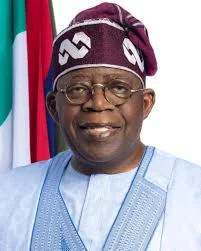
Above all, these developments must be understood within the broader economic vision of President Bola Ahmed Tinubu and the ambition to build a trillion-dollar Nigerian economy. The political future of these states cannot be separated from the economic future of Nigeria.
BAUCHI: M.A. Abubakar Political Return
Bauchi State presents one of the APC’s most interesting political contests. Former Governor Mohammed Abdullahi Abubakar, SAN, popularly known as M.A. Abubakar, is seeking another opportunity to lead a state he governed between 2015 and 2019.
His candidature brings experience, institutional knowledge and familiarity with the challenges of public administration. But experience alone cannot guarantee electoral success.
For M.A. Abubakar, the central task is to convince the people of Bauchi that the lessons of his previous administration can be translated into a more effective programme of governance.
Bauchi possesses considerable agricultural, tourism, commercial and human-resource potential. Its development requires sustained attention to infrastructure, education, healthcare, employment and investment.
The APC’s prospects will depend partly on whether its leadership can resolve internal disagreements, accommodate legitimate political interests and present a credible programme to the electorate.
For the former governor, the opportunity is not merely to return to office. It is to demonstrate how a second administration would differ from the first.
Political experience becomes valuable when it produces better judgment, stronger institutions and improved public service.
Bauchi’s electorate will ultimately determine whether the former governor has made that case convincingly.
Nasarawa: Wadada, Gov Sule and Politics of Continuity
In Nasarawa State, the approaching transition from Governor Abdullahi Sule presents a different political challenge.
Senator Ahmed Aliyu Wadada, the APC governorship candidate, is seeking to succeed an administration associated with investment promotion, industrial development and efforts to strengthen the state’s economic position.
Governor Sule’s professional background in engineering and industry has influenced his approach to economic management.
Nasarawa’s proximity to the Federal Capital Territory, its agricultural resources and its mineral potential offer substantial opportunities for investment and employment.
For Wadada, the challenge is to demonstrate how those opportunities can be developed further. His legislative experience provides a foundation for discussing economic policy, public finance and the relationship between state and federal institutions.
However, succession politics also creates competing interests. The emergence of rival political platforms and disagreements among influential stakeholders demonstrates that the contest cannot be taken for granted.
Wadada must establish a leadership identity that goes beyond the endorsement of his predecessor. He must demonstrate a clear understanding of the needs of Nasarawa’s communities and present practical solutions to the challenges of infrastructure, employment, security and public services.
The real test of political succession is whether a new administration can preserve what works, correct what has failed and open new opportunities for the people.
Gombe: Gwamna and Sustaining Inherited Development Agenda
Gombe State presents another important test of political continuity. Governor Muhammadu Inuwa Yahaya is approaching the completion of his constitutionally permitted second term, while Dr. Jamilu Isyaku Gwamna has emerged as the APC’s governorship candidate.
Gwamna’s professional experience, including his background in the electricity sector, provides a basis for examining his potential approach to investment, industrialisation and infrastructure. But the transition from one administration to another must be evaluated beyond political endorsements.
Gombe requires continued investment in agriculture, education, healthcare, energy, employment and the development of small and medium-sized enterprises. The state’s strategic position in the North-East offers opportunities for trade, logistics and regional economic integration.
For Gwamna, the central responsibility is to explain how continuity would improve the lives of ordinary citizens. That requires more than a promise to preserve existing programmes. It requires clear priorities, measurable targets and a willingness to address unresolved development challenges.
Political consensus within a party may provide organisational stability, but public confidence must still be earned. Continuity is most meaningful when it protects achievements while creating room for improvement.
NIGER: BAGO and the Promise of Agricultural Revolution
Niger State occupies a particularly important position in Nigeria’s agricultural futur. Bago has made agricultural transformation a defining priority of his administration.
His government’s emphasis on mechanisation, expanded cultivation, agricultural equipment and food production reflects an ambition to reposition Niger as a major contributor to national food security.
The administration has announced substantial investments in tractors, harvesters, fertilisers and other agricultural inputs. These initiatives represent an important policy direction, particularly in a state endowed with extensive agricultural resources.
However, the success of the agricultural revolution must ultimately be measured by results. How many farmers have gained reliable access to mechanised services? How much additional land has been cultivated? Have yields improved? Are farmers earning more? Have processing, storage and market access expanded?
These questions are essential because agriculture is not merely about food production. It is about employment, rural prosperity, industrial raw materials, export opportunities and economic resilience.
Niger also faces security challenges that threaten agricultural productivity and rural livelihoods. Sustainable transformation therefore requires improvements in security, roads, irrigation, storage, electricity and agricultural financing.
Governor Bago’s pursuit of a second term will inevitably be assessed against these realities. His agricultural agenda provides a substantial development proposition, but its long-term credibility depends on measurable outcomes.
A true agricultural revolution is not defined by the number of tractors commissioned, but by the number of farmers whose lives are transformed. If Niger can connect agricultural mechanisation with agro-processing, industrial investment and export development, its experience could contribute valuable lessons to Nigeria’s wider economic transformation.
Jigawa: Governor Namadi, Security and Foundation of Development
Jigawa State offers another important example of the relationship between governance, security and economic progress. Governor Namadi’s administration has placed emphasis on agriculture, education, healthcare, infrastructure and community participation in security.
Its approach to community security includes cooperation with traditional institutions, local leaders and recognised security agencies. This is particularly important in a state where agriculture and rural commerce remain central to economic life.
Farmers need secure access to their land. Traders need safe transport routes. Children need schools that function without disruption. Investors require confidence in the stability of communities.
Security, therefore, is not simply a law-enforcement concern. It is an economic necessity. Jigawa’s APC has also established a state campaign structure involving Governor Namadi and prominent party stakeholders, including former governors. This reflects an effort to coordinate political activities across the state’s 27 local government areas.
Yet political organisation and public-sector performance must be assessed separately. The effectiveness of the administration’s development agenda will depend on demonstrable improvements in security, agricultural productivity, education, healthcare and economic opportunity.
The strongest foundation for political continuity is a record of public service that citizens can recognise in their daily lives.
Prof. Yilwatda and the Task of Party Unity
The APC’s national leadership faces a complex responsibility as the 2027 elections approach. Yilwatda presides over a party with significant national reach, experienced political figures and substantial governing responsibilities.
But the party also faces internal disagreements, competing ambitions and the challenge of maintaining public confidence during a difficult period of economic adjustment.
The five states examined in this editorial demonstrate why effective party leadership requires more than public declarations of unity. Bauchi presents the challenge of reconciliation following a competitive political process.
Nasarawa requires careful management of succession-related disagreements. Gombe must balance consensus arrangements with broader political inclusion. Niger and Jigawa must demonstrate that incumbent administrations can defend their records while responding constructively to public criticism.
The national chairman’s responsibility is to encourage fair processes, strengthen internal institutions and create conditions in which disagreements can be resolved without weakening the party’s democratic character.
His leadership also offers an opportunity to promote greater policy coordination among APC-governed states.
Agricultural development in Niger, community security in Jigawa, investment opportunities in Nasarawa, industrial potential in Gombe and administrative reform in Bauchi represent areas in which states can learn from one another.
A national political party should be more than an electoral organisation. It should also be a platform for exchanging ideas, improving governance and developing practical solutions to national challenges.
The ultimate strength of a political party is not merely its ability to win elections, but its capacity to produce leadership that earns public trust. Tinubu and the Trillion-dollar Economy: Where States Must Fit In
President Bola Ahmed Tinubu’s trillion-dollar economy ambition places significant responsibility on federal and state institutions. No national economy can achieve sustained transformation through federal policy alone.
Agricultural productivity depends heavily on state-level investment, rural infrastructure and land administration. Industrialisation requires reliable energy, skilled labour, transport systems and predictable regulation.
Security requires cooperation across federal, state and community institutions.
And the expansion of small businesses depends on access to finance, markets and an enabling environment.
The economic circumstances of Bauchi, Nasarawa, Gombe, Niger and Jigawa therefore provide an important opportunity to examine how national economic aspirations can become practical development programmes.
The central question is not simply whether Nigeria can achieve a trillion-dollar economy. It is whether that economic expansion will translate into better living standards, increased productivity, sustainable employment and greater opportunity.
A trillion-dollar economy that leaves communities without reliable healthcare, quality education, safe roads and meaningful employment would represent an incomplete national achievement. Economic ambition must be matched by inclusive development.
Project 774: Connecting National Ambition with Grassroots Realities
Nigeria’s 774 local government areas represent an essential foundation for national development. Yet the realities of many communities remain insufficiently reflected in national policy discussions.
The development philosophy of Project 774 Network offers a bottom-up framework for understanding these challenges. Its central proposition is straightforward: national development must begin with an understanding of local needs.
Across Bauchi, Nasarawa, Gombe, Niger and Jigawa, the priorities may differ, but the underlying concerns are familiar.
Farmers need access to productive land, machinery and markets. Young people need skills, employment and opportunities for enterprise.
Families need functioning schools, accessible healthcare and safer communities. Small businesses need reliable infrastructure and an environment in which they can grow.
Project 774 can contribute by facilitating community engagement, identifying development priorities, documenting local experiences and encouraging accountability. Its value lies in connecting grassroots realities with the institutions responsible for addressing them.
Such a platform must remain committed to the public interest and serve communities without discrimination based on political affiliation. The larger lesson is that national development should never be measured exclusively from the perspective of federal and state capitals.
Nigeria’s economic future will be determined as much by what happens in its villages, farms, markets and local government areas as by decisions taken in Abuja.
2027 and the Shape of Victory
The political contests ahead in Bauchi, Nasarawa, Gombe, Niger and Jigawa will be shaped by personalities, party structures, alliances and the changing expectations of voters. But beyond these considerations lies a more fundamental question.
What should political victory mean for the ordinary Nigerian? For the farmer, it should mean improved productivity, safer access to farmland and better market opportunities.
For the young graduate, it should mean a realistic pathway to employment or entrepreneurship. For the trader, it should mean better infrastructure and fewer obstacles to doing business. For the child, it should mean access to quality education and healthcare.
And for communities, it should mean greater security, inclusion and confidence in public institutions. These are the standards against which the APC, its candidates and all competing political parties should be evaluated.
M.A. Abubakar must demonstrate the value of experience and the lessons of previous leadership. Wadada must present a credible programme for Nasarawa’s next phase of development. Gwamna must explain how continuity can produce greater opportunity in Gombe.
Bago must demonstrate that Niger’s agricultural revolution is delivering tangible benefits. Namadi must show that Jigawa’s security and development programmes are improving lives.
Yilwatda must strengthen the APC’s institutional credibility and internal cohesion. And President Tinubu must continue to confront the larger challenge of translating economic reforms into measurable improvements in national prosperity.
None of these outcomes is guaranteed.
The ultimate verdict belongs to the Nigerian electorate.
The Last Line
Nigeria does not lack political ambition. It does not lack natural resources, human talent or economic potential. What the country requires is the consistent transformation of these advantages into functioning institutions, productive enterprises, secure communities and improved living standards.
The approaching elections offer another opportunity to examine the relationship between political promises and public performance.
For the APC, the challenge is to demonstrate that its governing experience and policy proposals deserve renewed public confidence. For the opposition, the responsibility is to present credible alternatives.
For citizens, the task is to examine competing claims carefully and demand accountability. And for the nation, the objective must remain greater than the fortunes of any political party.
Because the greatest victory in 2027 will not be the number of Government Houses captured, the number of political flags raised or the number of electoral celebrations held.
It will be the number of Nigerian lives improved, the number of communities made safer, the number of opportunities created and the number of obstacles removed from the path of national progress.
When political contests are over and the campaign platforms have been dismantled, the real test of leadership will begin. The farmer will still need a market.
The graduate will still need an opportunity. The child will still need a school. And the nation will still need leaders capable of turning promises into progress.
That is the victory Nigeria deserves.
Alhaji Ibrahim is the Publisher & Editor-in-Chief of The Nationalist Magazine, and the National Coordinator, Project 774 Network