By Mohammed Ibrahim
As 2027 general elections approach, Nigeria must ask whether the power of federal appointments is being translated into coordinated governance, productive investment and measurable improvements in citizens’ lives.
There comes a moment in the career of every public figure when the question is no longer how much political influence he commands, but what enduring national purpose that influence serves.
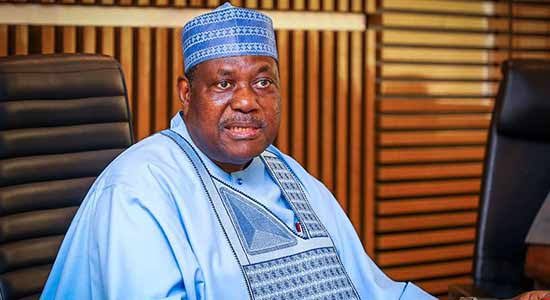
For Senator George Akume, Secretary to the Government of the Federation, that moment has arrived.
From the Government House in Makurdi to the Senate, from the Federal Executive Council to the Office of the Secretary to the Government of the Federation, Akume has travelled a political journey that places him among Nigeria’s experienced public office holders.
But history does not measure public service by the number of offices occupied.
It measures the institutions strengthened, the problems addressed, and the opportunities created for future generations.
Today, Akume occupies an office positioned at the intersection of presidential authority, federal administration, ministerial coordination and national policy implementation.
At the same time, President Bola Ahmed Tinubu has placed before Nigeria an ambitious economic objective: the creation of a trillion-dollar economy by 2030.
The country is also approaching the 2027 general elections, when competing political parties will seek public judgment on their programmes, records and leadership.
These developments raise a question of considerable national importance: Can the experience of Akume, the authority of the presidency and the combined responsibilities of federal ministers be translated into a coordinated development programme capable of moving Nigeria from economic ambition to measurable national progress?
That question is larger than Benue. It is larger than the North-Central. And it is certainly larger than the politics of 2027. It concerns the future of Nigeria itself.
When a Foundation Risks Becoming a Distraction
Benue occupies a permanent place in Akume’s political history. He governed the state between 1999 and 2007, built longstanding political relationships and developed an influential network that remained relevant after his departure from Government House.
It is understandable that Benue continues to command his attention. But a distinction must be made between legitimate concern for one’s political home and the responsibilities attached to national office.
The disagreements involving political interests associated with Akume and Governor Hyacinth Alia have become a recurring subject of public discussion. The dispute has involved competing interpretations of party leadership, political authority and internal processes.
Reconciliation efforts have been reported, but differences have persisted. It would be unfair to place responsibility for every disagreement upon one individual. Political disputes generally involve competing interests and decisions by several actors.
Nevertheless, Akume’s national standing creates a special expectation of restraint, dialogue and statesmanship. Benue has urgent problems that cannot be resolved through political competition alone. Communities affected by insecurity require protection and rehabilitation.
Farmers need safe access to productive land. Displaced families need opportunities to rebuild their lives. Young people need education, employment and economic prospects. And public institutions require cooperation rather than perpetual political uncertainty.
The question is therefore not whether Akume should abandon Benue; he should not. The question is whether his experience can help create an environment in which Benue’s political disagreements no longer overshadow its development needs.
A statesman should never become so occupied with defending his political foundation that he loses sight of the larger national responsibility built upon it.
Benue should remain part of Akume’s legacy. It should not define the limits of that legacy.
Reimagining North-Central’s Economic Corridor
The North-Central geopolitical zone consists of Benue, Kogi, Kwara, Nasarawa, Niger and Plateau States, with the Federal Capital Territory forming an important economic and administrative centre. Akume does not possess formal authority over these states or their elected governors.
But his political experience, national prominence and position within the federal administration create opportunities to encourage policy dialogue and intergovernmental cooperation.
The region should be examined not simply as a collection of political constituencies, but as an interconnected economic space. Benue possesses substantial agricultural potential. Niger offers opportunities for mechanised agriculture, irrigation, food processing and energy development.
Nasarawa combines agricultural and mineral resources with access to Abuja’s growing markets. Kogi’s strategic location, mineral resources and steel-development potential give it an important place in discussions about industrialisation.
Kwara presents opportunities in commerce, agriculture, education and manufacturing. Plateau offers agricultural, mineral and tourism potential, although insecurity and social tensions continue to affect communities. These economic strengths can complement one another.
Consider what becomes possible when agricultural production in Benue and Niger is connected to food-processing industries, efficient road networks, reliable electricity and distribution markets.
Consider the opportunities when mineral development in Nasarawa and Kogi is linked to domestic manufacturing, technical education and industrial investment. Consider the contribution of Plateau and Kwara when agricultural production, enterprise development and tourism are integrated into wider regional infrastructure planning.
Such possibilities require more than political declarations. They require feasibility studies, financing arrangements, secure investment environments, intergovernmental agreements and measurable implementation plans.
The North-Central’s greatest opportunity may lie, not in political uniformity but in economic cooperation among states with different political leaderships. The six states do not need to belong to one political camp to participate in one regional development vision. That is an important distinction for national leadership.
An Ambition That Must Survive Economic Scrutiny
President Tinubu’s aspiration to build a trillion-dollar Nigerian economy by 2030 has become an important reference point in national economic policy. The proposed National Development Plan for 2026–2030 is intended to provide a framework for advancing that objective. Yet ambition must be distinguished from feasibility.
A trillion-dollar economy is a measure of economic output expressed in United States dollars. Reaching that figure depends, not only on real economic growth but also on inflation, exchange-rate movements, productivity and the structure of the economy.
A larger nominal GDP does not automatically mean that ordinary households are more prosperous. The real questions are more demanding.
Will Nigeria produce more goods and services? Will industrial productivity improve? Will electricity become more reliable? Will exports become more diversified? Will food production and distribution become more efficient?
Will private investment generate sustainable employment? Will real household incomes rise? Will poverty decline? These are the outcomes that give economic growth its meaning. The trillion-dollar objective therefore cannot be treated merely as a political slogan.
It requires a credible economic model, realistic assumptions, stable institutions and disciplined implementation. The Federal Government’s development planning process has identified macroeconomic stability, energy security, economic diversification, infrastructure, governance, security and human capital among its principal priorities.
The challenge is to translate these interconnected priorities into an operational programme. And this is precisely where the Office of the Secretary to the Government of the Federation becomes relevant.
From Administrative Coordination to Measurable National Delivery
The Office of the Secretary to the Government of the Federation is charged with important responsibilities involving policy coordination, harmonisation, implementation monitoring and support for the Presidency. It is not a substitute for the constitutional authority of the President, the statutory responsibilities of ministers or the independent powers of other public institutions.
Its importance lies in helping the federal machinery function coherently. That distinction matters. The SGF cannot single-handedly create economic growth. He cannot independently determine fiscal policy, monetary policy, industrial investment or the decisions of state governments.
But his office can help identify where government institutions are working at cross-purposes, where implementation is delayed and where presidential priorities require stronger coordination. Consider a major agricultural investment programme.
The Ministry of Agriculture and Food Security may address cultivation and production. The Ministry of Water Resources and Sanitation may be relevant to irrigation infrastructure. The Ministry of Works may be responsible for essential federal road connections. The Ministry of Power may have a role in improving energy availability.
Financial institutions and private investors may provide capital. Security agencies must address threats to people and property within their lawful responsibilities. State governments and local authorities must contribute within their respective jurisdictions.
If these institutions work independently without effective coordination, the investment may underperform. If they operate through a coherent implementation framework, the prospect of achieving meaningful results improves.
The trillion-dollar economy will not be built by ministries competing to announce achievements. It will require institutions cooperating to deliver them.
That is the strategic significance of the SGF’s coordinating role.
Ministers and National Economic Programme
The Federal Executive Council brings together officials responsible for major areas of public policy. Each ministry has its own mandate, budgetary responsibilities and institutional challenges. But Nigeria’s economic transformation depends on what happens between ministries as much as what happens within them.
Agricultural development depends on transport, security, electricity, finance and market access. Steel development depends on mineral supply, industrial infrastructure, power, transportation and investment.
Petroleum and gas development depends on security, infrastructure, regulatory certainty, financing and the capacity to create domestic economic value. Manufacturing depends on electricity, logistics, skilled workers and access to competitive markets. Education and healthcare determine whether the country can develop and sustain a productive workforce.
The consequences of poor coordination are significant. A factory may be completed without adequate electricity. A road may be constructed without sufficient connection to productive economic centres. Agricultural equipment may be acquired without an effective maintenance or utilisation system.
An industrial project may attract public attention while struggling to secure financing or reliable raw materials. These are examples of the implementation risks that government must anticipate and address. Nigeria therefore requires stronger coordination of major economic programmes, with clearly assigned responsibilities and independently verifiable milestones.
A ministerial appointment should be understood, not merely as recognition of an individual’s political standing, but as an obligation to solve a defined set of national problems.
Towards National Economic Delivery Compact
This medium therefore proposes a National Economic Delivery Compact within the existing framework of federal governance. This would not require the creation of another expensive bureaucracy. It would require better integration of existing planning, budgeting, monitoring and reporting institutions.
Under such a framework, major economic programmes would have clearly defined objectives, responsible institutions, implementation schedules, funding arrangements and measurable outcomes.
For example, an agricultural transformation programme could identify the ministries and state institutions responsible for irrigation, cultivation, rural roads, electricity, storage, financing and market access. An industrial development programme could connect steel, minerals, energy, transport, investment promotion and workforce training.
A national logistics initiative could identify the relationships among highways, rail infrastructure, inland ports, customs processes and export competitiveness. A human-capital programme could connect education, healthcare, vocational training and employment opportunities.
The Office of the SGF could support interministerial coordination within its existing mandate, working with the Ministry of Budget and Economic Planning, the Ministry of Finance, the Presidency’s delivery and monitoring institutions and relevant sector ministries.
The objective would be to make government performance easier to assess. Each programme should answer five questions:
1. What specific problem is being addressed?
2. Which institutions are responsible for implementation?
3. What resources have been committed?
4. What measurable results are expected, and by when?
5. How will the public independently verify progress?
Such an approach would help distinguish announcements from implementation and expenditure from impact. It would also make it easier to identify projects requiring intervention before delays become failures.
Nigeria does not merely need more development promises. It needs a stronger system for converting promises into verifiable outcomes.
The Missing Bridge Between Ambition and Economic Scale
No credible trillion-dollar economy strategy can depend on public expenditure alone. Nigeria requires substantial private investment in agriculture, manufacturing, energy, infrastructure, technology, logistics and services.
But investment decisions are shaped by commercial realities. Investors examine the security of their assets, the reliability of electricity, the quality of infrastructure, regulatory predictability, access to foreign exchange, contract enforcement and the ability to earn sustainable returns.
A government may announce ambitious projects, but private capital will examine whether those projects are commercially viable. This is why institutional coordination matters. A proposed industrial zone cannot attract durable investment simply because land has been allocated.
It requires infrastructure, transparent land arrangements, reliable utilities, environmental compliance, workforce availability and access to markets. Likewise, agricultural mechanisation must be connected to farmers’ capacity to use equipment productively, maintain it and sell their output profitably.
The Federal Government should therefore evaluate investment programmes, not only by the value of announced commitments but also by the amount of capital actually deployed, enterprises established, employment created and production achieved.
The trillion-dollar ambition will require a productive relationship among federal institutions, state governments, domestic entrepreneurs, international investors and financial institutions.
Government can create the conditions for prosperity. Sustainable prosperity ultimately requires productive people, competitive enterprises and functioning markets.
North-Central’s Development Dialogue: A Practical Opportunity
Within the larger national programme, the North-Central presents an opportunity to demonstrate how regional economic cooperation can work.
A structured development dialogue could bring together the six state governments, the FCT Administration, relevant federal ministries, private investors, traditional institutions, universities, professional associations and community representatives.
Such a dialogue should not become a substitute for established institutions or an exercise in political control. Its value would lie in identifying projects with genuine cross-state economic benefits.
These could include agricultural value chains, transport corridors, industrial processing, regional markets, vocational training, investment facilitation and coordinated responses to security-related economic disruption. The outcomes should be specific.
A meeting without agreed priorities, responsible institutions, financing options and follow-up mechanisms would add little value. But a well-designed process could help states identify shared interests even where their political leaderships differ.
For Akume, the opportunity would be to encourage constructive engagement through appropriate institutional channels.
That would demonstrate how political experience can contribute to national cooperation without diminishing the autonomy of elected governors.
2027: Between Political Loyalty and Public Accountability
The 2027 general elections will place the Tinubu administration’s record under public scrutiny. Political parties will present their arguments. Candidates will defend their programmes. Opposition parties will offer criticisms and alternatives.
Citizens will assess competing claims according to their experiences, expectations and priorities. In this environment, the performance of ministers and other public appointees will naturally become part of the national discussion.
But a crucial institutional boundary must be maintained. The responsibility of ministers and the SGF is to administer government policy and serve the public.
The responsibility of political parties is to organise lawful political activity and present their case to the electorate. These functions may involve some of the same individuals, but they are not identical.
The APC National Chairman, Professor Nentawe Yilwatda, has responsibilities relating to party organisation and political processes. Akume’s official responsibilities concern federal coordination and governance.
Confusing these roles risks weakening public confidence in institutions that must serve citizens regardless of political affiliation. The more substantial question for public appointees is therefore whether their work can withstand transparent examination.
Have programmes been implemented?
Have public resources been used effectively? Have important obstacles been addressed?
Have communities benefited? What remains unfinished? What evidence supports official claims of progress? These are legitimate questions for every administration, irrespective of political party.
Public confidence is strengthened when government officials can demonstrate results, acknowledge shortcomings and explain how unresolved problems will be addressed.
Project 774: Bringing the National Economic Conversation Home
Nigeria’s 774 local government areas represent the communities in which national economic policy must ultimately acquire practical meaning.
The country cannot evaluate development exclusively through federal budget figures, investment announcements or national GDP statistics. The farmer wants secure access to land and profitable markets.
The trader wants reliable roads and a predictable business environment. The student wants an education that creates opportunity. The young graduate wants a realistic path into employment or enterprise. The family wants affordable healthcare, electricity and safety.
These needs differ across communities, but they share a common requirement: government policy must connect with everyday realities.
The development philosophy of Project 774 Network emphasises grassroots engagement, local needs assessment and the relationship between communities and public institutions.
This approach can contribute to national development through independent documentation, community consultations and evidence-based reporting.
The Federal Ministry of Budget and Economic Planning has already incorporated ward-level assessment into its development planning process. That provides an important basis for examining how national priorities relate to local economic conditions.
Independent community networks, universities, civil society organisations and professional institutions can contribute to this work without becoming extensions of partisan political structures.
The central principle is simple:
The trillion-dollar economy must not end at the doors of federal ministries; it must reach the farms, workshops, markets, schools and communities where Nigerians live and work.
2027 and What Nigerians Should Demand
The approaching election offers an opportunity to raise the standard of national political debate. Rather than concentrating exclusively on personalities, endorsements and party alignments, Nigerians should demand clearer explanations of public policy.
What has the administration achieved in stabilising the economy? How have reforms affected household purchasing power? What progress has been made in expanding electricity supply?
Are agricultural programmes improving food availability and farmer incomes? Are industrial policies attracting productive investment?
What has changed in the security of vulnerable communities? How effectively are federal and state institutions cooperating? And what measurable progress has been made towards the trillion-dollar economy objective?
These questions should be addressed through reliable data, transparent reporting and serious public engagement.
They should also be asked of opposition parties presenting alternative programmes.
Nigeria’s democratic future depends not simply on the intensity of political competition but on the quality of the choices placed before citizens.
Akume and the Weight of History
George Akume’s political career has already secured him a significant place in Nigeria’s public life.
But national office brings expectations that extend beyond political longevity.
His position offers an opportunity to contribute to stronger institutional coordination, improved implementation monitoring and more effective communication among government institutions.
The challenge is not to become the political controller of six states, neither is it to abandon legitimate concern for Benue. It is to demonstrate that the experience accumulated over decades can contribute to the effectiveness of national governance.
That is a more demanding ambition. It is also a more enduring one. For the President, the central test is whether economic policy can produce broad-based and sustainable improvements in national prosperity.
For ministers, the test is whether their programmes produce results that justify public expenditure and responsibility.
For governors, the test is whether state-level development priorities translate into productive economies and improved public services.
For the SGF, the test is whether coordination helps the machinery of government function more effectively.
And for citizens, the responsibility is to examine these records critically and exercise their democratic choices freely.
Nigeria has never suffered from a shortage of political ambition. Its history contains many powerful personalities, influential officeholders and ambitious development declarations.
What remains difficult is the consistent translation of political authority into institutions that work and economic opportunities that endure. The trillion-dollar economy ambition brings this challenge into sharper focus.
It requires more than speeches. It requires more than ministerial appointments. It requires more than investment announcements.
It requires security, productivity, infrastructure, human capital, effective institutions and sustained private-sector participation. Above all, it requires cooperation.
Akume’s career illustrates the transition from state-level politics to national responsibility. Benue provided the foundation. The North-Central offers opportunities for wider cooperation.
The Presidency has entrusted him with a central administrative responsibility. But the ultimate measure of his present office will be found in its contribution to the effectiveness of government.
A political figure may be remembered for the influence he exercised. A statesman is remembered for the institutions he strengthened and the lives his service helped improve.
As 2027 approaches, Nigerians should be able to examine the record of every public officeholder against that standard.
The most important questions will remain after the campaigns have ended.
Will the farmer have better access to markets? Will the manufacturer have more reliable electricity? Will the graduate find greater opportunity? Will communities become safer?
Will public institutions deliver better services? And will the country’s economic expansion produce greater prosperity for ordinary Nigerians? These questions are not partisan. They are national.
Benue gave Akume his political beginning. The North-Central provides a wider arena for cooperation. Nigeria has entrusted him with national responsibility. History will judge what that responsibility achieved.
For in the final analysis, the greatness of a government is not measured by the number of powerful people who occupy its offices. It is measured by the number of ordinary people whose lives become better because those offices exist.
That is the challenge before Akume. That is the responsibility of the Federal Executive Council. And that is the test of a trillion-dollar Nigeria.
Alhaji Ibrahim is thePublisher & Editor-in-Chief of The Nationalist Magazine, and National Coordinator, Project 774 Network
Akume Beyond Benue and Politics, Ministers and the Test of National Leadership


Leave a Comment