

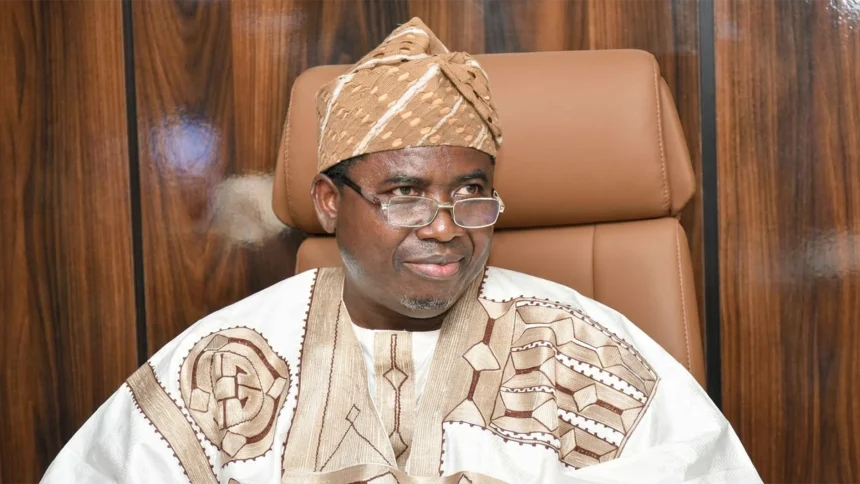
The Independent National Electoral Commission (INEC) has charged its newly appointed Youth Ambassadors to promote voter education, peaceful participation and responsible engagement among young Nigerians ahead of the 2027 general elections.
INEC Chairman, Prof. Joash Amupitan, gave the charge on Wednesday in Abuja during the investiture of the new INEC Youth Ambassadors.
Amupitan, who was represented by INEC National Commissioner, Prof. Rhoda Gumus, also urged the ambassadors to play an active role in combating misinformation and disinformation as preparations for the elections intensify.
He said the ambassadors should encourage young Nigerians to see participation in the electoral process as an opportunity to shape their future and contribute to the development of the country’s democracy.
According to him, young people constitute a significant proportion of Nigeria’s population and registered voters, as reflected in data from INEC’s Continuous Voter Registration (CVR) exercise.

Amupitan said Phase One of the 2026 CVR recorded 2,611,266 newly registered youths, while Phase Two recorded 4,110,123. Phase Three recorded another 2,602,960, bringing the cumulative figure to 9,324,349.
“This figure reinforces the critical role of active youth participation in Nigeria’s electoral process, which helps shape electoral outcomes and strengthen public confidence,” he said.
“Their voices, ideas, energy and participation are essential to the development and sustenance of our democracy.
More Read

“For this reason, the Commission considers meaningful youth engagement not as an option, but as a vital component of our electoral responsibilities.”
The INEC chairman described the appointment of the Youth Ambassadors as a deliberate effort to strengthen engagement between the electoral body and young Nigerians.
“We believe youth are more likely to engage with electoral information when communicated through credible, relatable and influential voices within their communities,” he said.
Amupitan congratulated the ambassadors on their selection, saying it reflected INEC’s confidence in their ability to promote positive change.
He urged them to carry out their responsibilities with dedication and humility while promoting civic awareness, peaceful participation and democratic development.
“Your position requires you to uphold values of integrity, impartiality, inclusiveness, respect and responsible citizenship,” he said.

“You are expected to represent the ideals of credible elections and promote participation without partisan bias.
“Whether through social media, community engagement, music, entertainment, education, sports or entrepreneurship, your influence can make electoral information accessible to youth.”
Earlier, INEC National Commissioner and Chairman of the Board of the Electoral Institute (BEI), Prof. Kunle Ajayi, highlighted the numerical strength of young Nigerians in the electoral process.
Ajayi said available CVR data showed that about 7.48 million people, representing 69.48 per cent of approximately 10.77 million new registrants, were aged between 18 and 34.
He, however, clarified that the figures were recorded before the application of the Automated Biometric Identification System (ABIS), which is used to identify and remove multiple and underage registrations.
“These figures demonstrate the considerable numerical strength of young Nigerians within the electoral population,” Ajayi said.
“That strength gives them the capacity to influence participation and electoral outcomes.”
He stressed that numerical strength alone would not be sufficient unless young Nigerians were properly informed, organised and responsibly engaged in the electoral process.
“The question is not only how many young Nigerians are registered to vote, but how many understand their rights and responsibilities,” he said.
“How many will participate, resist manipulation, reject violence, and verify information before sharing it?”
Ajayi also cautioned against the manipulation of young people for electoral violence, urging the ambassadors to encourage their peers not to allow political actors to exploit them.
“Political competition should never require young Nigerians to fight, destroy, or kill one another,” he said.
On misinformation and disinformation, Ajayi urged the ambassadors to adopt the principle, “Verify before you amplify.”
He also charged them to serve as a two-way bridge between INEC and young Nigerians by disseminating credible electoral information and relaying concerns and feedback from their communities to the Commission.
“You are not expected to defend INEC from legitimate criticism. Democracy allows citizens to question institutions,” Ajayi said.
“Your responsibility is to help ensure that criticism is informed, disagreement does not turn into violence, and political participation does not become manipulation.”
The newly appointed INEC Youth Ambassadors are Alex Ibeh, Emmanuel Ikubese, Mike Goodson, Christopher Yohanna, Amal Umar, Seun Ajayi, Thompson Ukeki, Ibrahim Bello and Sunday Agbaji.